
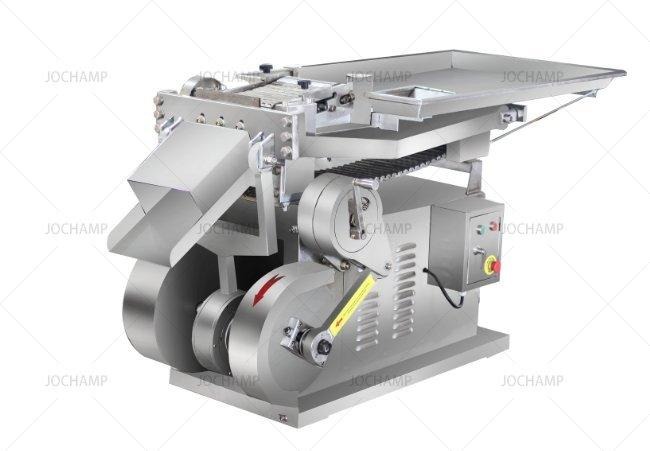
A machine with high-speed blades processing tons of combustible dust demands respect. Yet walk through enough tobacco plants and you will see the full spectrum: immaculate operations where safety is choreography, and grim corners where guards are zip-tied open and dust hangs in the air. The difference is rarely budget — it is knowledge and discipline. Whether you run one Tobacco Cutting Machine or a full processing hall, these are the standards that keep people safe and product compliant.
Mechanical Safety: The Non-Negotiables
Start with the iron rules. Every Tobacco Cutting Machine must have fixed guards over all blades, drives, and pinch points — not optional covers, but interlocked guards that stop the machine when opened. Emergency stops must be reachable from every operator position, clearly marked, and tested weekly; a button that does not work is worse than none, because it creates false confidence. Lockout/tagout procedures for blade changes and maintenance are mandatory, not bureaucratic: stored energy in a cutter can maim during what looks like a routine task. New operators should be signed off by a supervisor before touching the machine solo, and that sign-off should be documented.
Dust: The Invisible Hazard
Tobacco dust is combustible, and fine dust in an enclosed space with an ignition source is a textbook explosion scenario. This is not theoretical — dust incidents have leveled food and wood plants, and tobacco dust behaves the same way. Effective extraction at the Tobacco Cutting Machine is therefore safety equipment first and housekeeping second. Ducting should be grounded, filters maintained, and dust never allowed to accumulate on surfaces above minimal levels. Electrical equipment in dusty zones should carry appropriate ratings. If your extraction cannot keep the air visibly clear during operation, it is undersized — fix it before anything else.
Product Safety and Hygiene
Tobacco is a consumable, and regulators treat its processing accordingly. Product-contact surfaces on a Tobacco Cutting Machine should be food-grade stainless steel, smooth, and free of crevices where residue builds up. Cleaning procedures between product runs prevent cross-contamination — critical when switching between flavored blends or between tobacco and herbal products. Lubricants anywhere near the product zone must be food-grade. Document your cleaning: batch records showing when the machine was cleaned, by whom, and verified by whom are standard expectations in any serious audit.
Pest control deserves a mention too. Tobacco facilities attract stored-product pests, and a Tobacco Cutting Machine with accumulated residue is an invitation. Integrated pest management — monitoring, exclusion, and targeted response — protects both compliance and reputation.
Quality Standards and Documentation
Safety keeps people whole; quality systems keep product consistent. ISO 9001 provides the framework most buyers recognize, covering documented procedures, calibration, corrective actions, and management review. For tobacco specifically, many markets layer on excise and track-and-trace regulations that demand batch-level traceability — your cutting records should tie every output batch to input lots, machine settings, and operator identity. Customers increasingly audit suppliers before signing contracts; walking an auditor through clean records for your Tobacco Cutting Machine operation is one of the fastest ways to win their confidence.
Building the Culture
Standards on paper mean nothing without culture on the floor. The plants that get this right share traits: near-miss reporting without punishment, operators empowered to stop the line for safety concerns, and managers who visibly follow the same rules they enforce. Train continuously — not annual checkbox sessions but short, frequent refreshers tied to real incidents and observations. A Tobacco Cutting Machine run by a crew that owns its safety record is both the safest and the most productive asset in the building. Safety and quality are not costs competing with output; they are the foundation output stands on.
Preparing for Audits and Inspections
Whether it is a customer audit, a regulatory inspection, or an insurance review, the question is never if but when. Keep your Tobacco Cutting Machine documentation audit-ready at all times: maintenance logs, cleaning records, calibration certificates, training sign-offs, and incident reports filed — not in someone’s drawer. Auditors form their impression in the first ten minutes; organized records signal an organized operation.
Do your own internal audits quarterly. Walk the line with fresh eyes, check that guards are actually in place, verify the dust extraction is performing, and review the logs for gaps. Finding your own issues before an inspector does is not just good compliance — it is how a Tobacco Cutting Machine operation stays safe and sharp year after year. The best audit outcome is a boring one.
Make safety visible, not just documented. Post the lockout procedure at the Tobacco Cutting Machine itself, keep the emergency stop test log where operators sign it weekly, and review one near-miss at every team meeting. When the crew sees management treating safety as operational — not administrative — compliance stops being a chore and becomes culture. That is when a Tobacco Cutting Machine operation truly earns its safety record.