
Anyone who has ever tried to hold a real conversation across a language barrier knows the awkward gap: you speak, the phone app thinks, and the reply comes back stiff, sometimes wrong, occasionally hilarious. Real conversations do not wait. They overlap, shift subject mid-thought, and mix slang with technical terms. That is why the honest question is not whether a device translates — everything on the shelf translates — but whether it can actually keep up with the way people talk. For frequent travelers, cross-border sales staff, medical volunteers, hospitality teams, and international students, that difference decides whether a purchase becomes a trusted tool or another drawer-bound gadget. In this article we look at what understanding a conversation really requires, the situations where a translator’s limits reveal themselves first, and the practical signs that separate a genuinely capable device from one that only looks capable on paper. If you are considering a purchase this year, the goal is to walk away with better questions to ask before you tap buy, not with another sales pitch about language counts.
What Understanding Really Means in Live Translation
Understanding a conversation is not the same as decoding words. A phrase like “I am not going to say no” can mean yes, maybe, or a reluctant compromise depending on tone, pause, and prior context. A capable ai translator device has to work with all three layers at once — the literal words, the speaker’s intent, and the setting of the exchange. When any of those layers is dropped, the output becomes flat, sometimes misleading, and almost always socially awkward. Buyers who focus only on language count often miss this deeper layer entirely. That neglect explains why a device advertising fifty languages can still fail at a quiet coffee-shop chat, and why a model with fewer languages but stronger contextual reasoning can feel nearly invisible during a real meeting.
Beyond Word-for-Word Output
Direct substitution rarely survives contact with real dialogue. Slang, filler words, half-finished sentences, and speech overlap all break literal translation. A device that understands has to make small guesses in the moment: which speaker meant what, which word carries the load in the sentence, and which parts can be dropped without losing meaning. Users notice this immediately. When the translation feels like something a bilingual friend would say rather than a textbook page, the device has cleared the first serious bar. Watch for this specifically in questions and short answers, which are where literal engines fall apart the fastest. A one-word Japanese response, for example, can carry three different meanings depending on the preceding sentence, and only a model that tracks recent turns will land the right one.
Context, Tone, and Cultural Nuance
Politeness levels vary wildly across languages. Japanese, Korean, Thai, and even certain European languages encode respect grammatically, not just in vocabulary. A translation that ignores this can sound rude or juvenile without the speaker realizing anything is wrong. Good hardware pairs speech models with contextual signals — how formal the conversation has been so far, whether the speaker is addressing an elder, a client, or a friend — and adjusts the register accordingly. This is the layer that separates travel-souvenir devices from tools that actually get used in serious professional settings. Business travelers who negotiate contracts, or medical interpreters relaying sensitive information, cannot afford a translator that treats “you” as a single flat word. If a device cannot handle honorifics correctly, it should not be marketed as a business tool at all.
Situations Where a Translator Faces Its Toughest Test
Marketing videos are always filmed in quiet rooms with slow, clear speakers. Reality is much messier. The moments that expose a translator’s real ability are the ones nobody rehearses for: a crowded airport gate, a family dinner with three overlapping voices, a fast-talking taxi driver, or a phone call routed through a noisy speakerphone. If you plan to depend on a device, imagine the worst case first and check how it performs there, not in the ideal demo scenario. Any device that only shines under controlled conditions belongs on a display shelf. The ones worth carrying earn that place by holding up when circumstances get difficult.
Multi-Speaker Group Discussions
Dinners, meetings, and family gatherings rarely involve one voice at a time. Speakers interrupt, echo one another, and switch languages mid-sentence. A well-designed device separates voices, tags each turn, and outputs translations in a way that preserves who said what. Cheaper models collapse everything into a single stream, which quickly becomes unusable when three or four people are involved. If you regularly host or attend multilingual gatherings, this capability alone can decide the purchase. Look for hardware that offers dedicated group modes, ideally with speaker labeling on the transcript. That feature is not a bonus; it is the difference between using the device and quietly putting it away because the output has become impossible to follow.
Noisy Public Environments
Airports, train stations, restaurants, and street markets are exactly where a traveler needs help — and exactly where weak microphones fail. Noise cancellation and directional pickup matter here far more than raw language accuracy. A device that works beautifully at a quiet desk but garbles anything above a normal conversation level is not travel gear. Testing in real noise before travel, rather than after, saves a lot of frustration. A reliable translator should degrade gracefully as noise rises, not collapse suddenly at some invisible threshold. The best current designs use dual-microphone arrays with active suppression tuned to human speech frequencies, and they clearly indicate when signal quality drops rather than pretending nothing is wrong.
How to Judge a Device Before You Trust It
The fastest way to evaluate a translator is to skip the marketing altogether and run a short set of realistic tests. Read a paragraph containing idiomatic phrases and see how the device handles them. Have a conversation with someone who speaks the target language natively and ask them to rate the output for tone as well as accuracy. Try switching languages mid-sentence, since that is common in border regions and among bilingual families. Then pay attention not just to correctness but to speed — a translation that arrives three seconds late is often useless in fluid dialogue.
Battery, offline coverage, and update policy matter almost as much as raw accuracy. A device that only performs when connected to strong Wi-Fi is a companion for hotel rooms, not for hiking trails or long flights. Firmware updates that keep improving the language models are what turn a purchase into a long-term tool rather than a one-year novelty. Focused makers in this category, such as INNAIO, tend to publish clear update roadmaps because their customers are professional travelers and repeat users rather than casual gift-shoppers. That pattern is worth checking before committing to any specific model.
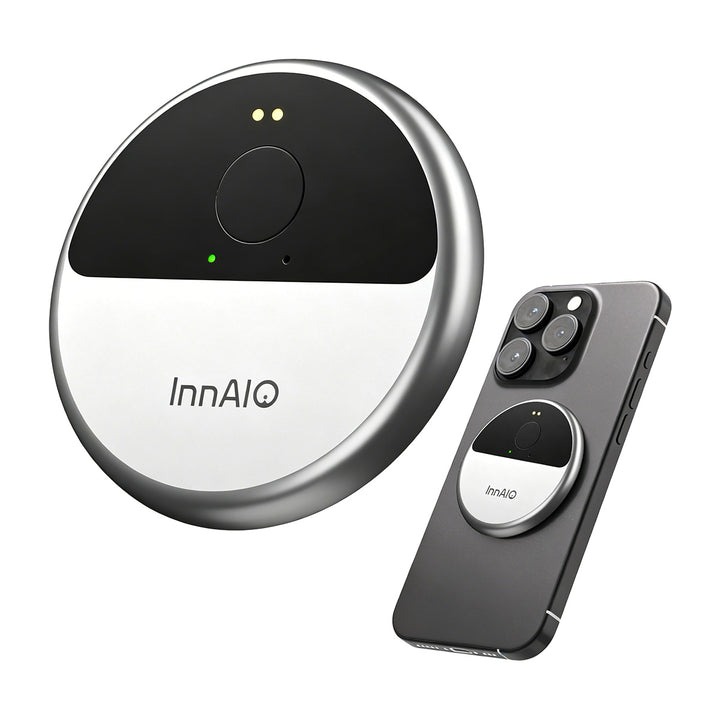
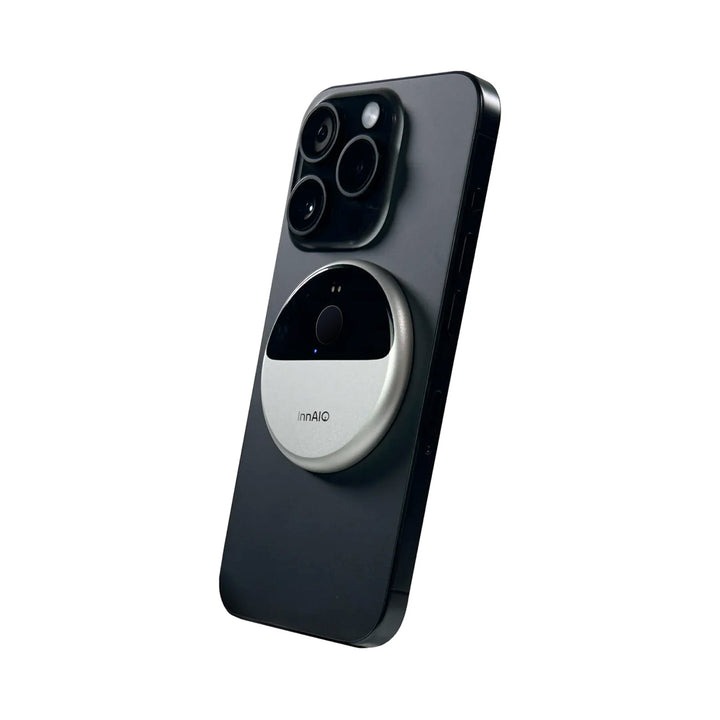
Finally, look at how the device handles failure. When it does not understand, does it stay silent, guess wildly, or ask for a repeat? Graceful failure is a mark of thoughtful engineering. A translator that quietly indicates uncertainty — with a light, a subtle sound, or a repeat prompt — earns trust much faster than one that confidently produces nonsense. In tense settings like medical triage, legal intake, or negotiation, that honesty about limits is the whole point. A device that never admits doubt cannot be trusted with anything that actually matters, no matter how impressive its language list looks on the packaging.
Answering the Question Honestly
So — which translator truly understands real conversations? Not the one with the longest language list, and not the one with the flashiest advertisement. It is the one that handles overlapping speakers, keeps up with fast dialogue, respects tone, and admits when it is not sure. That combination is rare, but it exists in the current generation of purpose-built hardware from focused makers rather than general electronics brands. If you rely on cross-language communication for work, care, or travel, the price of getting this wrong is measured in missed meaning, not just dollars. Test carefully, favor devices that show their limits honestly, and choose the one that behaves like a helpful bilingual companion rather than a talking dictionary. Ask better questions in the store, run a five-minute test with real speech before committing, and pick the tool that lets you focus on the person in front of you instead of the machine in your hand. That is what genuine understanding on the go actually looks like today.