
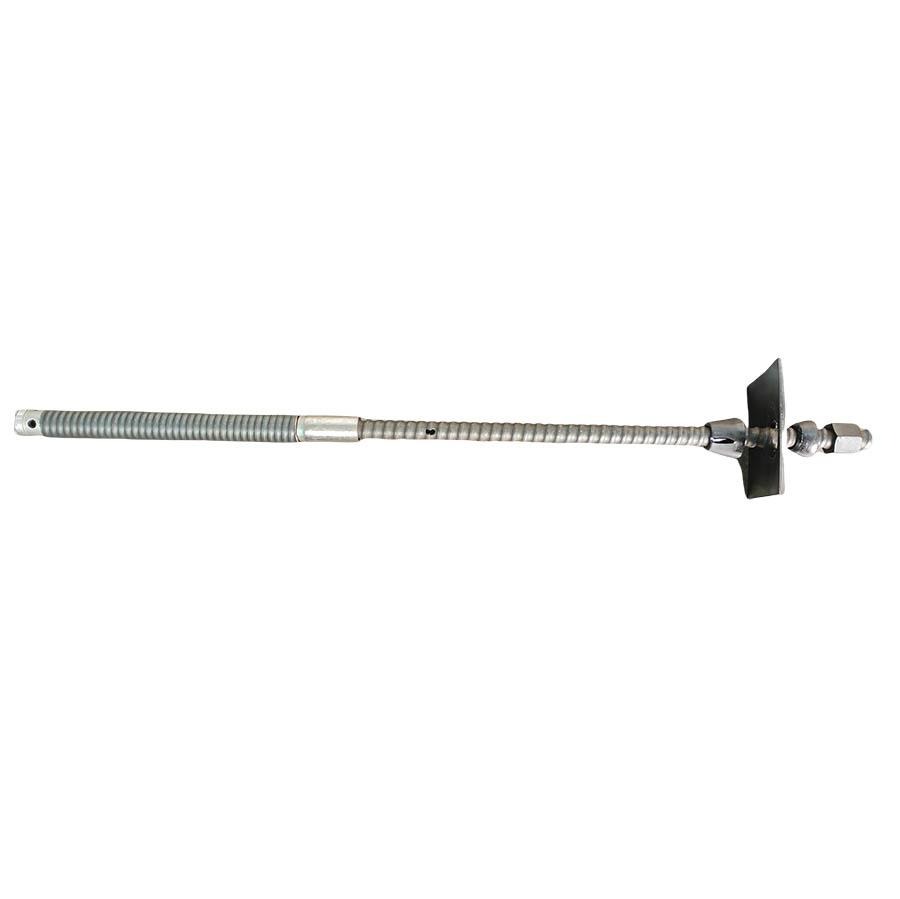
Buying anchors by price per meter is how projects end up with bars that don’t fit the bits, nuts that don’t match the threads, and a supplier who shrugs when it all arrives. A self drilling rock anchor is a system, not a stick of steel — and the specs that matter most aren’t always the ones printed on the quote. Get the details right and a self drilling rock anchor delivers exactly what the design assumed; get them wrong and the site crew pays for it.
Here’s what to check before you order, so the anchors that show up are the ones your design assumed.
Start With the Thread System
Self-drilling bars come in thread families — R-thread (rope thread) and T-thread are the common ones — and everything downstream hangs off this choice: couplers, nuts, bits, and plates must all match. R-thread sizes like R32, R38, and R51 cover most geotechnical work; T-thread suits heavier loads. Most manufacturers publish load tables per thread size — use them when sizing your self drilling rock anchor. Pick the thread first, then confirm every component on the quote belongs to the same family. Mixed systems are the most common ordering mistake, and it only reveals itself on site, when the self drilling rock anchor components won’t assemble.
| Thread | Outside diameter | Typical use |
| R32 | 32 mm | Soil nailing, light micropiles |
| R38 | 38 mm | General anchoring, tunneling |
| R51 | 51 mm | Heavy loads, large-diameter work |
Diameter and Steel Grade
Diameter sets the capacity; steel grade decides how much of it you can actually use. Check the guaranteed yield and ultimate loads against your design values — not brochure nominals, but certified mill figures. When in doubt, size the self drilling rock anchor for the worst credible load, not the average one. A self drilling rock anchor from a serious manufacturer ships with test certificates for the batch. If the supplier can’t produce them, that tells you everything about the supplier.
Learning to read a mill certificate is worth the half hour it takes. Check that the heat number on the certificate matches the markings on the bars, and that the tested yield and elongation meet the grade claimed on the quote. This is also where counterfeit risk shows up: a certificate that covers a different batch, or no certificate at all, is the oldest trick in the book.
Match the Drill Bit to the Ground
The bit is a wear item, and the wrong choice costs time, not just money. Soft-ground bits for clay and soil, cross bits for medium rock, button bits for hard rock — let the ground report drive this, not the price list. A good supplier will ask about your ground before recommending a self drilling rock anchor bit; if they don’t ask, be wary. Order spare bits with the bars — running out mid-drive costs far more than the bits themselves. And double-check the bit thread against the bar thread. Yes, this gets gotten wrong more often than anyone admits.
Corrosion Protection Is Decided at Order Time
For temporary works, bare or lightly coated bars are acceptable. For anything permanent, specify the protection up front: hot-dip galvanizing, epoxy coating, or full double corrosion protection in aggressive ground. Discuss the exposure conditions with the manufacturer when specifying a self drilling rock anchor for permanent works — there is no practical way to retrofit protection after delivery. A self drilling rock anchor that corrodes out years early was never a bargain at any price. Factor the design life into the comparison, not just the invoice.
Buy the System, Not the Bar
The cheapest bar quote usually excludes bits, couplers, nuts, plates, and grouting accessories — items you then buy separately, at worse prices, and occasionally from a system that doesn’t quite fit. Ask for a complete self drilling rock anchor system price covering every component. One matched system installs faster and behaves predictably under load, which is worth far more than a small saving on the bar alone. Crews notice the difference immediately when a self drilling rock anchor system arrives complete and compatible.
There is also a lead-time angle. A supplier quoting the full system has usually thought about stock: bits, couplers, and plates on the shelf, not just bars. Ask what ships immediately and what gets manufactured to order — finding out the couplers are eight weeks out after the bars arrive is a painful discovery.
Three Questions to Ask Before You Order
Ask these three before signing anything for a self drilling rock anchor order:
- Can you provide mill test certificates for this exact batch?
- Is every component — bit, coupler, nut, plate — from the same thread system as the bar?
- What’s the delivery schedule, and how fast can you supply a different bit if the ground changes?
Order with these checks done and the self drilling rock anchor that arrives will match the design, fit together, and go in without drama. Skip them and you’ll learn why the cheapest quote is rarely the cheapest outcome.