

Most skincare advice assumes a cooperative face. It assumes you can introduce a retinoid, push through a few weeks of flaking, and arrive somewhere better. For a large group of people, that arithmetic never works out. The barrier is already compromised, the flush arrives within minutes of applying anything, and every promising product ends up in a drawer alongside the last six.
If that pattern sounds familiar, the problem may not be which active you chose. It may be that your skin has run out of tolerance for being acted upon at all. Ingredients work by provoking a controlled injury and letting repair follow. When repair capacity is the bottleneck, more provocation simply digs the hole deeper.
Light offers a different entry point. Rather than depositing a molecule that the skin must process, it delivers energy that cells either use or dissipate. That distinction matters enormously for reactive skin, and it explains why people who have abandoned half the pharmacy find their way to devices instead. This article looks at what that shift actually involves, how to build a routine around it, and how to judge whether it is working.
Why Reactive Skin Stalls on Conventional Routines
A healthy stratum corneum tolerates insult because it rebuilds quickly. Lipids are replenished, inflammation resolves, and the surface returns to baseline before the next application arrives. Reactive skin loses that rhythm. Each product lands on a surface that has not finished recovering from the last one, and the cumulative signal your skin receives is not renewal but siege.
The usual response is to strip everything back to a cleanser and a bland moisturiser. That helps, but it also stalls progress. You stop the irritation without addressing the texture, redness, or slack tone that sent you looking for solutions originally. This is the trap that sends people toward photon led light therapy in the first place: they need an input that asks something of the skin without wounding it.
It is worth naming the specific groups who hit this wall. People with rosacea-prone complexions, whose vascular reactivity turns any warming ingredient into a flare. People recovering from a procedure, told to avoid actives for weeks but impatient to support healing. And the largest group of all, people who over-exfoliated their way into a damaged barrier and now cannot tell which of their symptoms are the original concern and which are self-inflicted.
Light as an Input, Not an Ingredient
The mechanical difference is straightforward. A topical active must penetrate, remain stable, reach a target, and then be cleared. Every one of those steps can go wrong, and several of them involve disrupting the barrier on purpose so the molecule can get where it needs to go. Photons skip the entire logistical chain. They pass through tissue to a depth determined by wavelength and are absorbed by molecules already present in your cells.
Because nothing is deposited, there is no clearance burden and no window during which the skin is chemically compromised. You are not asking the barrier to open. This is why light sessions tend to sit comfortably alongside the minimal routines that reactive skin requires, and why a session rarely produces the stinging feedback that trains people to quit.
What the Skin Does With Red and Near-Infrared Wavelengths
Red wavelengths are absorbed largely within the dermis, where fibroblasts sit. Near-infrared travels further, reaching tissue below the skin’s own layers. In both cases the primary absorber of interest is cytochrome c oxidase, an enzyme in the mitochondrial respiratory chain. When it absorbs light in these bands, electron transport becomes more efficient and cellular energy availability rises.
Energy availability is not a cosmetic outcome on its own, but it is upstream of several things people care about. Fibroblasts producing collagen are doing metabolically expensive work. Keratinocytes rebuilding a barrier are doing expensive work. A cell operating on a tight energy budget triages, and repair is usually what gets deprioritised. Raising the ceiling does not force repair to happen, but it removes one common constraint on it.
The corollary matters just as much: light does not supply raw materials. If your diet, sleep, and barrier support are poor, better mitochondrial efficiency has little to build with. People who treat a device as a replacement for the basics are consistently disappointed.

Rebuilding a Routine Around Tolerance
Start by establishing what your skin is like without intervention. Give yourself two weeks on a cleanser, a moisturiser, and sunscreen, nothing else. This is uncomfortable advice because it feels like doing nothing, but without it you cannot attribute any later change to any particular cause. Photograph your face in the same light, at the same time of day, at the start of that period.
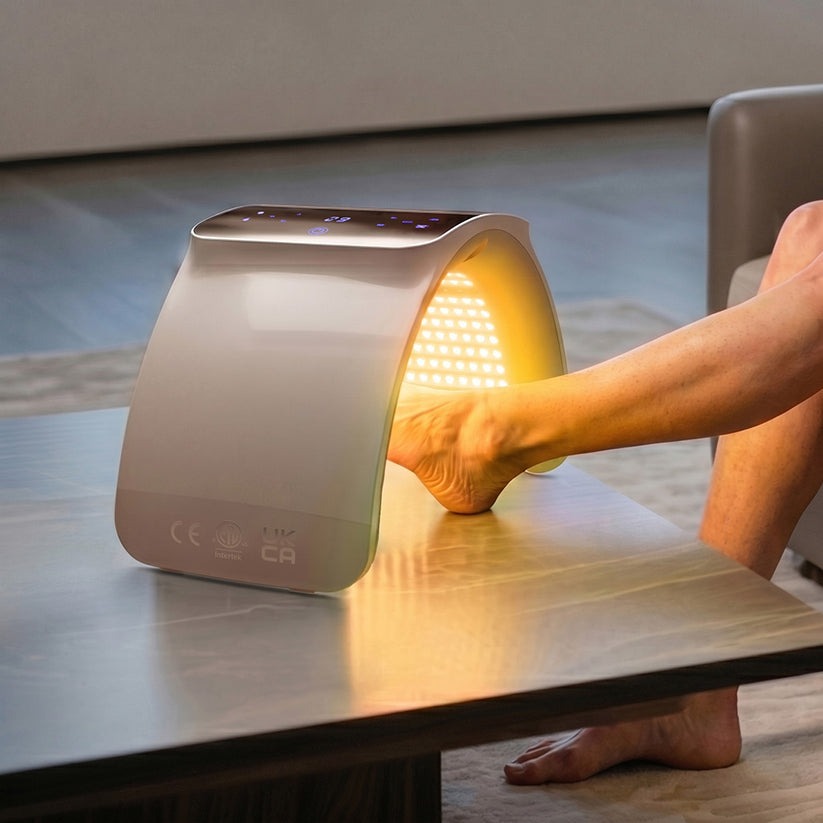
Introduce light sessions next, and only light. Short and frequent beats long and occasional, because the goal is a repeated signal rather than a single dose. Three to four sessions in a week is a reasonable rhythm to hold for a month. Keep the distance and duration consistent so that if something changes you can point to a variable. Brands with a clinical bent, including BestQool, publish irradiance figures at stated distances precisely so that this kind of consistency is possible.
Sequencing Light With a Stripped-Back Regimen
Clean skin absorbs light better than skin coated in occlusive products, so run sessions on a freshly washed, dry face and moisturise afterwards. Warmth from a session can transiently increase the sting of anything applied immediately after, which is a nuisance rather than a danger, but it is another reason to keep the post-session step bland.
When you do reintroduce an active, reintroduce exactly one, at a low frequency, and hold everything else steady. Twice a week is plenty. The point of the light foundation is that it gives you a stable platform to test against, rather than the usual situation where four variables change at once and the flare cannot be traced to any of them.
Reading Your Own Results Honestly
Expectations cause more abandoned devices than results do. Structural change in skin follows the collagen turnover cycle, which is measured in months. Anyone assessing progress after a fortnight is measuring hydration and transient flush, not remodelling. Set your first real review point at eight weeks and resist the urge to adjudicate before then.
The mirror is a poor instrument for slow change because it updates your reference point daily. Photographs under fixed conditions are the only practical way to see gradual improvement, and the discipline of taking them also keeps you honest about how consistent you actually were. A short log of session days, duration, and any product changes turns a vague impression into something you can interpret.
Watch for the specific signs that matter to reactive skin: how long a flush takes to settle, whether the tight feeling after cleansing has eased, whether you can now tolerate a product that previously stung. These barrier-level markers usually shift earlier than visible texture, and they are the ones that tell you the underlying situation is improving.

When Light Is Not the Right Tool
Some presentations need a diagnosis rather than a device. Persistent redness with pustules, sudden changes in a mole, unexplained swelling, or any lesion that will not heal belong with a dermatologist first. Light therapy is also a poor match for concerns driven mainly by pigment scattered through the epidermis, where other modalities are better targeted.
There are also medication interactions worth checking. Several common drugs, including some antibiotics and retinoid derivatives taken orally, raise photosensitivity. That does not automatically rule out red and near-infrared use, but it does make a conversation with whoever prescribed them the right next step rather than an optional one.
Being clear about the boundaries is what makes the tool useful. A device that reliably supports barrier recovery and gradual dermal change, used on skin that has stopped being battered weekly, is a modest and dependable proposition. Asked to resurface a face in a fortnight, it will fail, and the failure will be blamed on the technology rather than the brief.
Calmer Skin Through Patience, Not Potency
Reactive skin does not need a stronger product. It needs a longer stretch of not being provoked, combined with something that supports repair rather than demanding it. That is the narrow but real space light occupies, and it is why people who have exhausted the ingredient route often find it is the first thing that holds.
The practical version of this is unglamorous. Strip the routine back, establish a baseline you can photograph, add short sessions at a consistent distance several times a week, and change nothing else for a month. Review at eight weeks against the images rather than the mirror, and reintroduce actives one at a time onto a platform that has stopped flaring.
None of that is fast, and none of it produces a dramatic before-and-after in a fortnight. What it does produce is a routine your skin can actually stay on, which after years of abandoned drawers is the outcome that matters most.