
The pale patches on a variegated ficus leaf are areas where chlorophyll is absent or reduced. Chlorophyll is the pigment that gives leaves their green color and drives photosynthesis, so cells lacking it cannot produce energy for the plant. This creates an obvious trade-off. The tree gains visual appeal, but it loses some of its capacity to generate food. Variegated ficus trees are, as a result, slower growing and more sensitive to poor light than their solid green relatives.
Variegation can appear spontaneously as a mutation in a single branch or leaf, and growers who notice an attractive pattern will propagate it through cuttings or grafting to create a stable cultivar. This is why named varieties such as Ficus elastica ‘Tineke’ remain consistent from one plant to the next. Without human intervention, variegation is often unstable and may revert to plain green over time.
Notable Varieties Worth Knowing
Several variegated ficus cultivars have earned loyal followings. Ficus elastica ‘Tineke’ is perhaps the most widely grown, with large, glossy leaves edged in creamy white and marbled with pale green. It has a formal, almost architectural presence that suits modern interiors.
Ficus elastica ‘Ruby’ takes the same rubber plant form but adds a warm blush of pink or red that deepens with bright light. It is slightly more demanding than ‘Tineke’ but offers a richer color palette.
Ficus benjamina ‘Starlight’ and ‘Variegata’ bring variegation to the weeping fig, with small leaves edged in white. These varieties are elegant but notoriously sensitive to changes in environment, and they often shed leaves when moved or when conditions shift.
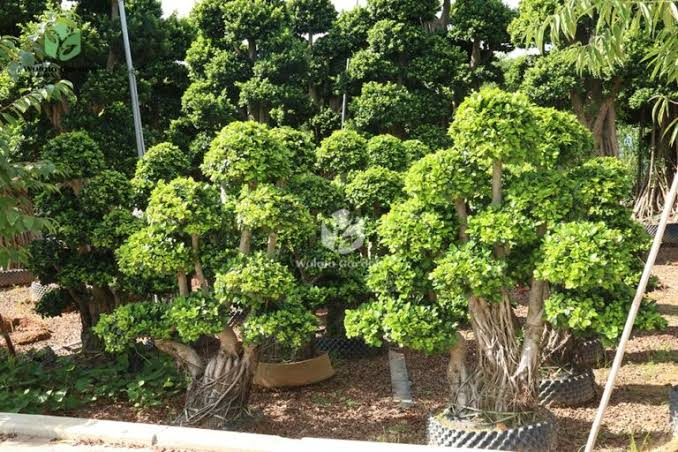
Ficus microcarpa ‘Variegata’ is frequently grown as a bonsai or topiary specimen. Its compact leaves and tidy growth habit make it well-suited to shaping, and the variegation adds a layer of visual interest to trained forms.
Light: The Single Most Important Factor
If there is one thing a variegated ficus tree needs more than its green counterpart, it is light. The pale sections of the leaves cannot photosynthesize, so the green portions must work harder to support the whole plant. Bright, indirect light allows the tree to produce enough energy to sustain healthy growth while preserving the variegation that makes it desirable.
Direct afternoon sun can burn the pale tissue, which lacks the protective pigments found in green leaves. An east-facing window or a position several feet back from a south or west window typically provides the right balance. When natural light is inadequate, a full-spectrum grow light can fill the gap.
A variegated ficus that is not receiving enough light will often respond by producing more green tissue and fewer variegated leaves, or by dropping leaves entirely. This is not a sign of disease but a survival strategy. Moving the tree to a brighter location usually corrects the problem over time.
Watering Without Overdoing It
Overwatering is the most common mistake made with variegated ficus trees, and it is also one of the most damaging. These trees prefer soil that is allowed to dry slightly between waterings. A moisture meter or a simple finger test can help determine when the soil has dried enough to warrant another watering.
Signs of overwatering include yellowing leaves, mushy stems, and a general decline in vigor. Underwatering produces different symptoms, typically curling, browning leaf edges and eventual leaf drop. Striking the right balance requires attention, especially during seasonal changes when the plant’s water needs shift.
Humidity matters as well, particularly for Ficus benjamina varieties. These trees are known for dropping leaves when humidity drops or when the plant is moved. Misting, grouping plants together, or using a pebble tray can help maintain humidity around the tree without soaking the soil.
Pruning With Variegation in Mind
Pruning a variegated ficus tree serves both practical and aesthetic purposes. Removing dead or damaged leaves keeps the tree tidy and reduces the risk of pest problems. Selective pruning can also encourage bushier growth and maintain a desired shape.
When pruning, it helps to consider where the variegation falls. Cutting back to a node in a green area will produce new growth from that point, while cutting back to a variegated node may produce growth with different patterning. Growers who want to maintain a specific look often prune with this in mind.
Repotting is typically needed every two to three years for young trees and less frequently for mature specimens. A well-draining potting mix works well, and the new pot should be only slightly larger than the old one to avoid the risk of waterlogged soil.
Common Problems and Practical Solutions
Leaf drop is the most frequent complaint among variegated ficus owners, and it is usually a response to stress. Changes in light, temperature, humidity, or watering can all trigger it. The key is to identify the cause, correct it, and give the plant time to recover rather than making further changes that compound the problem.
Pests such as spider mites, scale, and mealybugs can also affect variegated ficus trees. Regular inspection of the undersides of leaves and along stems helps catch infestations early. Treating with insecticidal soap or horticultural oil usually resolves the issue if caught in time.
A Demanding but Rewarding Plant
A variegated ficus tree is not the easiest houseplant to grow, but it is among the most rewarding. Its patterned foliage adds color and texture to any indoor space, and its sensitivity to its environment makes it a plant that responds visibly to good care. For growers willing to meet its needs for bright light, consistent moisture, and stable conditions, it offers years of beauty and a living connection to the tropical forests where its ancestors originated.