
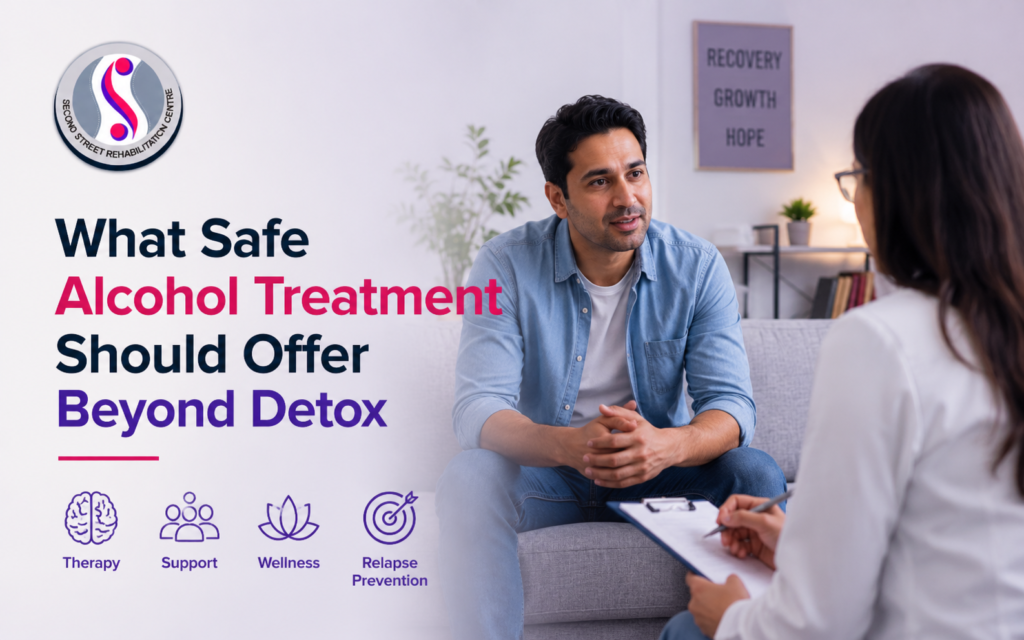
Alcohol problems can hide behind work, family duties and promises to stop. Some people drink each morning to ease shaking or face the day. Families searching for the best alcohol rehabilitation centres in India should look for safe detox, therapy and care after discharge. Comfort and claims are not enough.
Stopping alcohol is only the first step. Care must address urges, poor health, stress and habits built around drinking.
Why Quitting Alcohol Alone Can Be Unsafe
A person who drinks heavily each day should not stop without a health check. Withdrawal may cause shaking, sweat, nausea, fear and poor sleep. Severe cases can bring fits, fever, seeing or hearing things and extreme confusion. Life may be at risk.
Past fits, years of heavy drinking, illness, poor food intake and sleeping-pill use raise the risk. A doctor needs the amount, last drink, past attempts and medicines taken.
WHO found alcohol caused about 2.6 million deaths worldwide in 2019, or 4.7% of all deaths. Harm included liver disease, cancer, heart disease, injury and poor mental health. Alcohol dependence needs healthcare, not blame. (World Health Organization)
How Professional Alcohol Treatment Begins
Understanding Professional Treatment for Alcohol Addiction starts with listening. The team should ask how much and when the person drinks, what happens during attempts to stop, and how it affects work, debt, sleep and home life.
Staff may check pulse, blood pressure, fluids and food. Tests depend on symptoms and health. Low mood, panic, trauma, poor sleep and self-harm thoughts need review.
During detox, staff watch for changes and give medicines when needed. The aim is to prevent harm and keep the person stable. Detox does not treat the causes of drinking.
Therapy Must Prepare the Person for Daily Life
Therapy helps spot triggers and thoughts that come before a drink. CBT can test beliefs such as “alcohol is the only way to sleep” or “one drink will stay under control”.
Practice should cover salary day, family fights, work stress, weddings, festivals and friends who drink. Each risk needs an action, such as leaving early, calling a counsellor or staying with a safe relative.
Medicines may reduce urges or support abstinence, but a doctor must choose them. Liver health, other drugs and treatment goals affect what is safe.
Families Need Guidance as Well
Relatives may swing between anger and rescue. Insults can push drinking into hiding, while giving cash or clearing debts may let it continue.
Family sessions can set rules for money, contact and safety. With consent, access to cash or payment apps may be limited for a set time. The aim is support, not permanent control.
Checks to Make Before Admission
Ask who manages detox and if a doctor is available. The centre should explain how it handles a crisis. Fees, rules, family contact, reviews and discharge plans must be in writing.
There should be no forced work, public shame, punishment or promised cure. Stay length should depend on need and progress, not a sales package.
Before discharge, the person needs follow-up dates, contacts, a medicine plan and steps for urges. Fits, extreme confusion, seeing or hearing things, self-harm thoughts or loss of consciousness need urgent care. Safe treatment protects life during withdrawal and builds skills for change at home.