
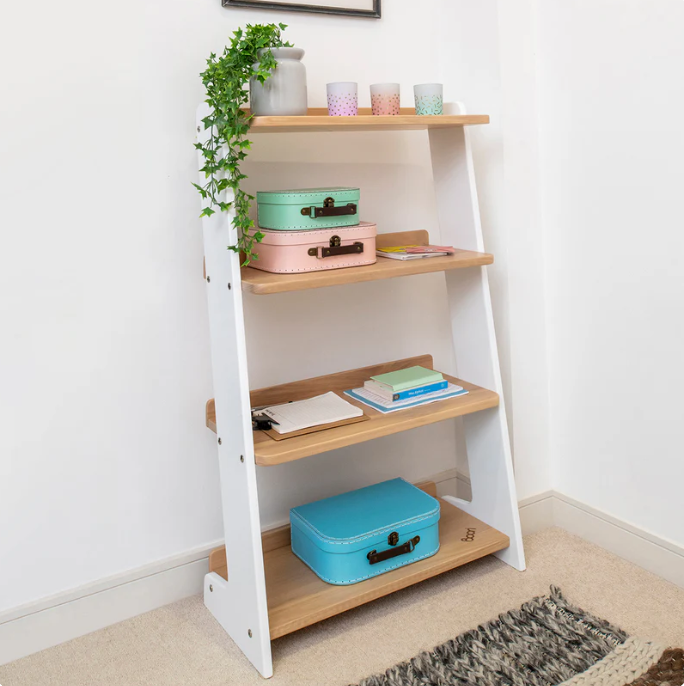
A well-chosen kids bookshelf does more than just store picture books. It shapes how children relate to reading, encourages independence, and brings some much-needed order to what is often a chaotic space. Whether you are setting up a nursery, a toddler’s bedroom, or a dedicated reading nook, finding the right bookshelf comes down to four things: safety, accessibility, size, and whether it can grow with your child.
Key Takeaways
- Front-facing shelves help children engage with books more often because they can see the covers and make their own choices.
- Safety features like anti-tip wall anchoring and rounded edges should be a baseline requirement, not an afterthought.
- The best kids bookshelves are sized for the child using them. If they can reach it independently, they will use it more.
- Convertible designs offer better long-term value, moving from picture books in toddlerhood through to chapter books in school years.
- Pairing a bookshelf with a small reading chair or floor cushion gives children a reason to sit, stay, and read.
Why a Dedicated Kids Bookshelf Matters
Children’s relationship with books begins well before they can read independently. Research in early childhood development consistently shows that homes where books are visible and easy to reach produce stronger readers. Not stored away in boxes or pushed to high shelves, but out in the open where a child can see them. A dedicated bookshelf makes that possible, and it sends a clear message to kids: books are important and they belong here.
Beyond literacy, a well-organised bookshelf also teaches children responsibility. When books have a clear home, tidying becomes a natural habit rather than a battle. It also encourages independence. Children who can reach their own books are far more likely to pick one up on their own, rather than waiting to be prompted.
Types of Kids Bookshelves: A Comparison
Not all bookshelves are created equal. The right style depends on your child’s age, the room layout, and how you want them to interact with their books.
| Type | Best For | Age Range | Key Benefit |
| Front-facing shelf | Toddlers and early readers | 1 to 6 years | Cover visibility boosts selection |
| Vertical bookcase | Larger collections | 5 years and up | High storage capacity |
| Step/ladder shelf | Styling and display | 3 years and up | Fits awkward corners well |
| Convertible bookshelf | Long-term use | 0 to 10+ years | Grows with the child |
| Wall-mounted shelf | Small spaces | 3 years and up | Saves floor space |
What to Look for When Buying a Kids Bookshelf
1. Safety First
Children’s furniture must meet Australian safety standards. When evaluating any kids bookshelf, check for the following:
- Anti-tip hardware: wall anchoring brackets should be included with the shelf or available separately.
- Rounded or smooth edges: sharp corners are a real hazard in a child’s bedroom.
- Non-toxic finishes: paints and lacquers should be free from lead and harmful VOCs.
- Sturdy base construction: the shelf should not wobble when loaded with books.
2. Height and Accessibility
A bookshelf should be proportionate to the child using it. General guidelines by age:
- Ages 1 to 3: Shelves no higher than 60 to 70cm work well; front-facing slots are ideal at this stage.
- Ages 4 to 6: Shelves up to 90cm are manageable; a mix of front-facing and standard shelves works well.
- Ages 7 and up: Standard bookcase heights up to 120cm become appropriate as children grow.
3. Durability and Materials
Children are hard on furniture. Look for solid timber, quality MDF with robust joins, or solid wood composites. Avoid bookshelves with thin back panels or particleboard shelves that sag under weight. A quality kids bookshelf should comfortably handle years of daily use, stacking, and yes, the occasional attempt to climb it.
4. Design That Grows With Your Child
Buying furniture your child will outgrow in two years is both costly and wasteful. Look for designs that transition well over time. A front-facing picture book shelf that later accommodates chapter books and school materials gives you much better value in the long run.
How to Style a Kids Bookshelf
Styling a children’s bookshelf is about balancing function with visual appeal. A well-styled shelf makes books inviting, reduces visual clutter, and adds warmth to the room.
- Rotate books seasonally. Bring a fresh selection to the front every few months to keep things interesting.
- Mix how the books face. Some covers out, some spines showing. It keeps the shelf looking less like a library and more like a curated space.
- Use small baskets for loose items. Board books, puzzles, and activity books are easier to manage when they have their own basket on a lower shelf.
- Add a small plant or framed print. These break up the visual weight of the books and stop the shelf looking too uniform.
- Keep the lowest shelf fully within your child’s reach. Their current favourites live here, no asking required.
Creating a Reading Corner Around Your Bookshelf
A bookshelf becomes a much more effective literacy tool when it is paired with a proper reading space. Children who have a consistent spot to read, whether that is a small chair, a floor cushion, or a bean bag, tend to develop reading habits that stick. The space itself becomes part of the ritual.
Try placing the bookshelf near a window where there is natural light, and put a low seat right beside it. A small lamp works well for evening reading. The aim is to make choosing a book and sitting down with it feel like something worth looking forward to, not a chore.
Boori’s range of nursery and children’s furniture is designed with exactly this philosophy in mind. Their pieces complement each other to create cohesive, calming spaces where children genuinely want to spend time.
Common Mistakes to Avoid
- Buying too large, too soon. An oversized shelf can overwhelm small children and tends to fill up with clutter rather than books.
- Skipping wall anchoring. Even a shelf that looks stable can tip when a toddler pulls on a lower shelf edge.
- Overfilling the shelf. Leaving some space on each shelf makes it much easier for children to pull a book out and put it back themselves.
- Choosing style over function. A beautiful shelf your child cannot reach independently will not get used the way you hope.
- Ignoring material quality. Cheaper materials can warp, peel, or deteriorate over time, particularly in a room that gets a lot of use.
Frequently Asked Questions
What age should a child have a bookshelf?
Children can benefit from a bookshelf from as early as 6 to 12 months. At this stage, a low front-facing shelf at floor level allows babies and young toddlers to explore books on their own during tummy time and play. The key is that the shelf is at their eye level and within reach.
How many books should be on a kids bookshelf?
For toddlers and early readers, fewer books on display tends to work better. Showing 10 to 20 books at a time, rotated regularly, is more effective than overwhelming the shelf with everything the child owns. As children grow and develop stronger preferences, the collection can expand from there.
Are front-facing bookshelves better for kids?
For children under 6, yes. Front-facing shelves display book covers rather than spines, which are far more visually engaging for young children who cannot yet read titles. Seeing a familiar cover makes it significantly easier for children to self-select a book they want to read.
How do I stop a kids bookshelf from tipping over?
Always use the anti-tip wall anchoring brackets that come with the shelf, or purchase them separately. Secure the bracket to a wall stud if possible. Additionally, place heavier items on lower shelves to keep the centre of gravity low.
What materials are safest for kids bookshelves?
Solid timber and quality MDF with certified non-toxic finishes are the safest options. Look for furniture that complies with Australian standards for children’s products (AS/NZS 8124) and is free from harmful chemicals. Brands that specialise in children’s furniture, such as Boori, design their pieces to meet these standards as a baseline.
Final Thoughts
Choosing a kids bookshelf might seem like a straightforward purchase, but it genuinely shapes how children interact with books at home. The right shelf, one that is safe, sized correctly, and easy to access, becomes a natural part of the daily routine. It shows children that their books have a proper place, and that reading is something worth making room for. For Australian families looking for furniture that combines quality craftsmanship with thoughtful design, exploring a dedicated kids bookshelf collection built specifically for children’s rooms is a strong starting point.