
Cabins, hunting properties, and rural land parcels share a common security gap: no power infrastructure and no reliable internet backbone, which rules out most conventional camera systems from the start. Traditional wired cameras are a non-starter without electrical service, and even battery cameras become impractical when the nearest outlet is a two-hour drive away and recharging means an entire trip just for maintenance.
Solar security cameras fill this gap in a way few other options can, generating their own power indefinitely as long as they get reasonable sun exposure. Pairing solar power with cellular connectivity, rather than relying on wifi that may not exist at all on remote land, turns an off-grid property into something you can actually monitor without visiting it constantly. This guide covers what off-grid owners need to know before setting up solar camera coverage on land without standard utilities.
Why Off-Grid Properties Need a Different Approach
Standard installation advice assumes a home wifi network and occasional access for maintenance. Neither assumption holds for a remote cabin or land parcel you might visit once a month. Connectivity has to come from cellular data rather than a home router, and the camera’s power source has to be self-sustaining for weeks or months at a stretch without anyone nearby to intervene if something goes wrong.
This changes the priority order for camera selection. Battery life and solar charging efficiency matter more than resolution or smart features, since a camera that runs out of power during the three weeks between visits is useless no matter how sharp its footage would have been. Cellular signal strength at the specific property also needs verification before buying anything, since coverage maps from carriers are often optimistic compared to actual signal on wooded or hilly land.
Cellular Versus Wifi for Remote Land
Cellular-connected cameras use a data plan instead of a home network, which means monthly or seasonal fees but removes the dependency on infrastructure that simply doesn’t exist on undeveloped land. Before committing to a specific camera brand, checking which cellular carriers it supports against actual coverage at your property, using a phone from that same carrier as a rough test, prevents buying hardware that turns out to have no usable signal once mounted.
Some remote properties sit in genuine dead zones for every major carrier. In these cases, local storage becomes essential since there’s no way to stream or upload footage in real time, and retrieving recordings means physically visiting the property and pulling the memory card.
Maximizing Solar Charging in Variable Conditions
Rural properties often have more unobstructed sun exposure than suburban yards crowded with trees and neighboring structures, which works in favor of solar cameras. Still, tree cover, seasonal foliage, and shifting sun angles across the year all affect how much charge a panel actually collects, and remote monitoring makes it harder to catch a slowly draining battery before it becomes a real problem.
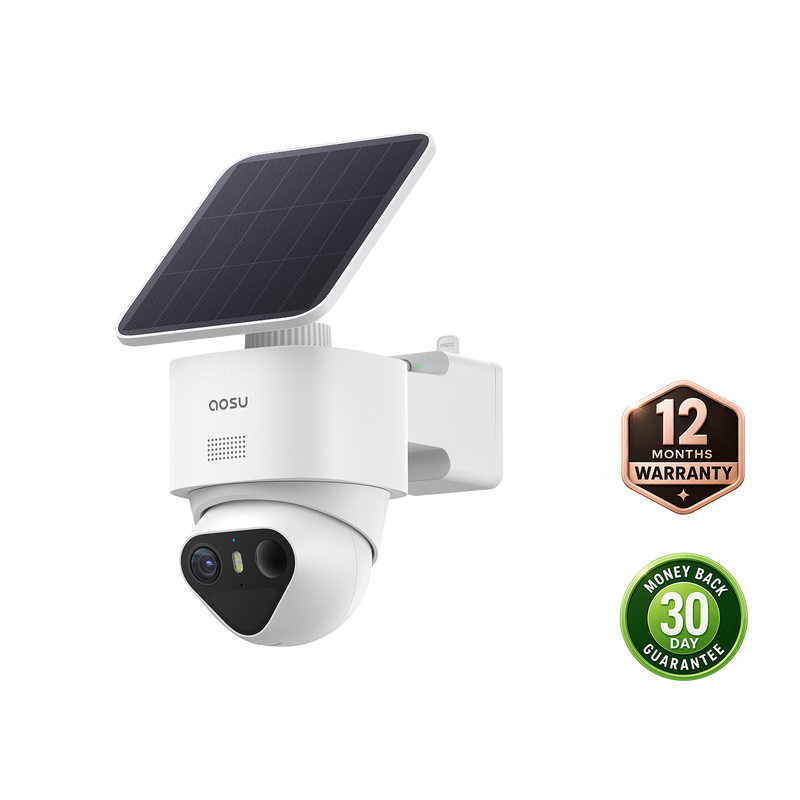
Choosing a camera with a generously sized solar panel, rather than the smallest option available, builds in a buffer against weeks of overcast weather or unexpectedly heavy shade that wasn’t obvious during a brief site visit. AOSU’s solar security cameras are built with this kind of unattended operation in mind, pairing solar charging with battery capacity sized to carry a camera through extended stretches without direct sun, which matters far more on a property you can’t check daily.
Positioning for Year-Round Reliability
A panel angled for optimal summer sun may underperform badly once winter sun angles drop lower in the sky, and this shift is more pronounced the further north a property sits. Adjustable panel mounts that can be re-angled seasonally, even if that only happens once or twice a year during a scheduled property visit, help maintain consistent charging rather than accepting a big seasonal dip in performance.
Physical Security for Unattended Cameras
Cameras on remote land face risks beyond weather and connectivity. Wildlife can knock a poorly mounted camera loose, and a camera visible from a road or trail on land that occasionally sees trespassers might itself become a target. Mounting cameras at height, using tamper-resistant brackets, and choosing housing colors that blend with the surrounding environment all reduce the odds of losing a unit before it ever captures something useful.
Setting motion alerts to notify a phone even without a strong data connection, queuing the alert to send once signal is briefly available, gives at least some visibility into activity on a property you can’t watch constantly, rather than discovering a problem only during the next physical visit.
Monitoring Land You Can’t Visit Daily
Off-grid properties need cameras built around self-sufficiency rather than convenience features designed for a connected suburban home. Solar power handles the energy side reliably when panels are sized generously and angled for year-round performance, while cellular connectivity, verified against actual on-site signal, handles monitoring when wifi simply isn’t an option.
Getting coverage right on remote land takes more upfront verification than a typical home installation, but the payoff is a system that keeps working through weeks of no visits at all, giving genuine peace of mind for property that would otherwise sit completely unmonitored.