
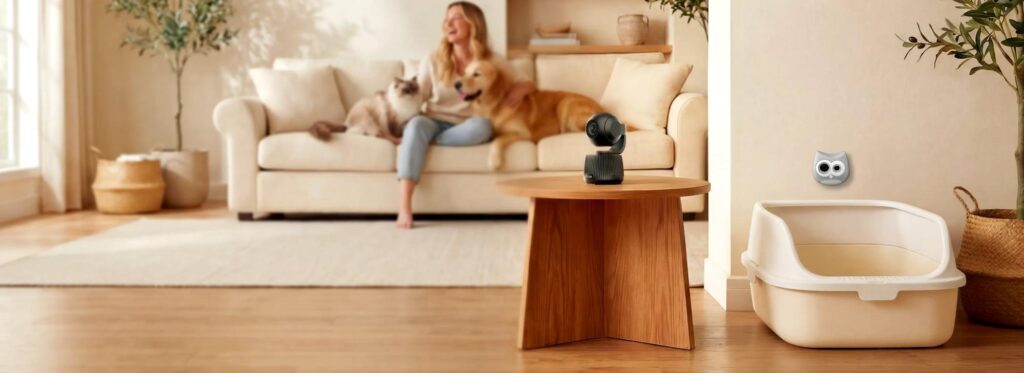
A pet camera is a simple device with a simple job. It watches your dog or cat while you are not there, sends a live feed to your phone, and often lets you talk, listen, or dispense a treat from wherever you happen to be. That is the plain description, and it is enough for most owners. The reason these cameras have become popular in ordinary homes is not because they are exciting gadgets. It is because they answer a very ordinary question that pet owners ask every workday: what is happening with my pet right now, and is everything alright. This guide walks through what a pet camera actually is, what it does well, what it does not do, and how to decide whether one belongs in your home.
What a Pet Camera Actually Is
Strip away the marketing language and a pet camera is a small internet-connected video device pointed at the parts of your home where your pet spends time. It captures video, usually in high definition, and streams it to an app on your phone or tablet. Many models add night vision, so the picture stays clear in low light. Some include a microphone for two-way audio, a speaker so your pet can hear your voice, motion or sound alerts, and a treat launcher for interactive play. That is the entire category. A good pet camera does these things reliably, without complicated setup, and without eating your bandwidth or your patience.
It is helpful to think of a pet camera as a monitoring tool rather than a training tool or a medical device. It shows you what is happening. It does not diagnose anxiety, it does not replace a vet visit, and it does not stop a dog from chewing the sofa. Understanding this from the start keeps expectations reasonable and helps you get real value from the device instead of feeling let down by it.
Who Actually Benefits From One
The most obvious users are people who work outside the home for long stretches. If your dog is alone from morning until evening, or your cat spends the weekend by itself while you visit family, a camera gives you a low-effort way to check in. You open the app during a lunch break, see the dog napping on the rug, and go back to your day feeling settled. That small emotional reassurance is the honest, everyday reason most people buy these cameras.
Owners of new pets also lean on them heavily. A puppy in its first month at home, a rescue dog getting used to being alone, a cat recovering from surgery — all of these situations involve a lot of quiet worrying. Being able to glance at a live feed replaces guesswork with information. If the puppy is asleep, you relax. If it is pacing, whining, or getting into something it should not, you can call a neighbor, come home early, or note the pattern for your trainer.
Multi-pet households find cameras useful for a different reason. When two dogs or a dog and a cat share space, small squabbles and stress signals often only happen when no humans are around. A camera lets you see the actual dynamics rather than guess from the aftermath of chewed shoes or an overturned water bowl. Travelers who leave pets with sitters or in a family member’s care also appreciate being able to peek in from a hotel room. It is not spying on the sitter. It is closing a small gap of uncertainty during a trip.
The Features That Genuinely Matter
Camera specs can look overwhelming, but only a handful of features affect daily experience. Video quality is the first. A clear, wide-angle picture is worth more than resolution numbers on a box, because your pet may spend most of its time in one corner of the frame. Night vision matters if your pet moves around after dark or if the room simply gets dim in the afternoon. Without it, evening viewing turns into a black rectangle with vague shapes.
Two-way audio is often oversold and often useful anyway. Speaking to a nervous dog through a camera can sometimes settle it and sometimes confuse it further, depending on the individual pet. The honest way to think about it is that two-way audio is nice to have for occasional check-ins and reassurance, not a substitute for real interaction. Motion and sound alerts, on the other hand, are practical almost every day. A push notification saying the camera detected barking or movement tells you when to actually open the app rather than staring at a still image out of habit.
Reliable Wi-Fi performance is the quiet feature that decides whether you will keep using the camera or stop bothering after a month. A device that constantly drops the feed, freezes, or takes half a minute to load ruins the whole point. This is where brands with a focus on pet-specific hardware, like SiiPet, tend to pay attention to the small things: stable connection to household routers, an app that opens quickly, and controls that a non-technical family member can use without a tutorial.
Placement and Setup in a Real Home
Where you put the camera matters more than most people realize. A camera on a tall shelf pointing down covers a lot of floor, which is where dogs and cats actually live. A camera on a low table gives a strange angle and often ends up watching furniture legs. If your pet has a clear favorite spot — the sofa, a window perch, a crate — aim the camera to cover that area rather than trying to see the whole house. Most owners only need one well-placed camera. Adding a second one usually only makes sense for multi-story homes or when you want to watch both a resting area and a common trouble spot such as the kitchen or front door.
Setup should not take an afternoon. In most cases, you plug the camera in, connect it to your home Wi-Fi through an app, and start viewing within a few minutes. If a product requires long configuration steps or a technical background, that is a signal to reconsider the product, not to try harder. Pets do not care how you configured it, and neither should you.
What Cameras Can and Cannot Fix
A pet camera can turn vague worry into a clear picture. It can catch behavior you did not know was happening. It can let a housebound family member stay connected to a pet they cannot walk. It can help you understand your pet’s routine so you can plan feeding, walks, and playtime around the times of day when your pet is actually awake and interested.
It cannot replace physical care. A camera does not feed the dog, walk the dog, clean the litter box, or notice a subtle limp the way a hands-on visit does. If your pet is anxious to the point of destructive behavior, watching them be anxious on video is not the solution — a trainer, behaviorist, or vet is. If your pet is elderly or medically fragile, a camera adds reassurance but does not substitute for regular check-ins by a person. Keeping the tool in its lane makes it more valuable, not less.
Privacy, Cost of Ownership, and Sensible Habits
Because a pet camera is a networked device inside your home, treat it with the same care you would any smart product. Use a strong, unique password for the account. Keep the app updated. If the camera supports two-factor authentication, turn it on. Point the camera at spaces where your pet is, not at bedrooms or areas where guests would not expect a camera. These are small habits that take a minute each and remove almost all of the practical risk.
Ongoing cost is worth thinking about as well. Some cameras offer full functionality without a subscription. Others put cloud video history, longer recording, or advanced alerts behind a monthly fee. Neither model is wrong, but you should know which one you are buying into before you commit. For many households, local viewing plus basic alerts is enough, and paying for cloud storage only adds value if you actually plan to review past footage.
Bringing It Back to Everyday Peace of Mind
A pet camera is not a life-changing invention, and it does not need to be. It is a small tool that closes a specific gap in the day: the hours when you and your pet are apart. Used well, it turns uncertainty into a quick glance at the screen, gives new owners a way to learn their pet’s rhythms, and helps busy households stay connected to the animals that share their space. The best approach is to choose a straightforward device, place it thoughtfully, and use it in a way that fits your actual routine. When it works quietly in the background and you barely think about it, that is when a pet camera is doing its job.