
Introduction
When products move through warehouses, delivery vehicles, and distribution networks, packaging has to do more than simply surround an item. It needs to reduce the effect of knocks, drops, vibration, and everyday handling while keeping costs under control. For many businesses, Expanded Polystyrene packaging offers a practical balance between protection, weight, flexibility, and affordability.
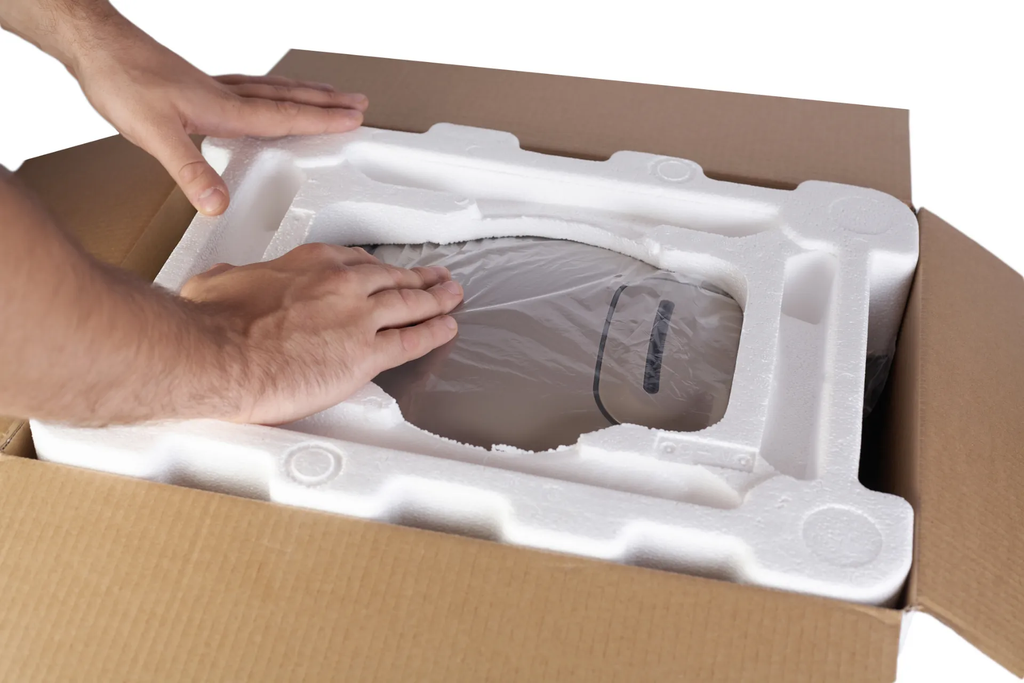
Expanded polystyrene, commonly known as EPS, is a lightweight foam material made up largely of air. Its structure allows it to cushion products without adding significant weight to the finished package. It can also be cut, shaped, and fabricated into different forms, making it suitable for everything from simple protective inserts to purpose-designed packaging components.
Whether a company needs packaging for high-volume distribution or a custom solution for an unusual product shape, EPS can be adapted to suit the application.
What Makes Expanded Polystyrene Suitable for Packaging?
The main reason EPS remains popular is its combination of physical and practical properties. Unlike heavier protective materials, it provides cushioning without substantially increasing the weight of a shipment.
Its cellular structure contains a very high proportion of air, which contributes to its low density. This makes it easier to handle during packing and transportation while also helping businesses manage shipping weight.
Another important advantage is that EPS can be processed into different shapes. Depending on the product and its protection requirements, manufacturers can cut or form the material into fitments, corners, blocks, supports, or other internal components.
This flexibility means packaging does not always have to be based on a one-size-fits-all design. A company can develop an internal structure around the product itself, helping keep the item securely positioned inside the outer carton.
Key Benefits of Expanded Polystyrene Packaging
Choosing protective packaging is usually a balance between product safety, manufacturing cost, ease of handling, and practical performance. EPS performs well across several of these areas.
1. Lightweight Construction
One of the most obvious advantages of EPS is its low weight. Businesses can use protective components without unnecessarily increasing the overall weight of a shipment.
This is particularly useful when products are distributed in large quantities. Even small weight savings can become significant when hundreds or thousands of packages are being transported.
The lightweight nature of EPS also makes packing and unpacking easier for warehouse teams.
2. Cost-Effective Protection
Packaging budgets matter, particularly for products that require large volumes of protective material. EPS is considered one of the more economical foam options available for packaging applications.
Its affordability can make it an attractive choice when a business needs dependable protection without moving toward more expensive specialist foams.
For high-volume applications, the combination of low material weight and relatively low cost can provide considerable value.
3. Protection Against Everyday Impact
Products can experience numerous small impacts before they reach their final destination. Packages may be moved between storage areas, placed on pallets, loaded into vehicles, or handled several times during delivery.
EPS can help absorb and distribute some of these everyday knocks. It is especially useful for applications where products need protection from simple drops, bangs, and handling impacts.
The goal is not simply to fill empty space inside a box. Properly designed foam fitments can hold the product in position and create a protective layer between the item and the outer packaging.
4. Easy to Shape and Adapt
Every product has different dimensions and vulnerabilities. A fragile component may need support around specific edges, while a larger item may require blocks at strategic points.
Expanded Polystyrene packaging can be cut and shaped to create protective components suited to individual products. Hot-wire cutting and other fabrication methods can be used to produce practical packaging forms.
This adaptability is valuable during product development because businesses do not necessarily have to redesign the product itself to accommodate generic packaging.
Understanding Expanded Polystyrene Blocks
Expanded polystyrene blocks are another useful form of EPS protection. Rather than creating a complete moulded package, blocks can be positioned around an item to provide support, separation, or cushioning.
Their simplicity makes them useful in applications where a straightforward protective solution is more appropriate than a highly engineered insert.
For example, blocks may be placed around equipment inside a carton to prevent movement or create a gap between the product and the box walls. They can also be cut to specific dimensions where required.
This approach can be particularly useful for businesses dealing with products in different sizes or with changing packaging requirements. Instead of relying on one fixed design, packaging components can be adjusted according to the item being shipped.
Custom Packaging or Standard Designs: Which Is Better?
There is no universal answer because the right option depends on the product, shipment volume, budget, and required protection level.
Standard packaging can be useful when the product has straightforward dimensions and does not require specialised support. It can simplify purchasing and make routine packing operations faster.
Custom packaging becomes more valuable when a product has an unusual shape, delicate sections, or specific areas that need additional protection.
A well-designed custom package can position the product securely and reduce unnecessary empty space. It may also allow the outer carton and internal fitments to work together as one system rather than treating them as separate components.
For businesses developing new products, testing samples before committing to full production can also help identify potential design problems early.
EPS and the Importance of Thermal Insulation
Protection is not always limited to physical impact. Some products can also be affected by changes in temperature during transportation or storage.
Expanded polystyrene has useful thermal insulation properties because of its cellular structure. This characteristic can make it suitable for applications where maintaining a more stable temperature around the packaged product is important.
The exact performance required will depend on the application, environmental conditions, product sensitivity, and packaging design. In situations where fire performance is an important consideration, specialist flame-retardant grades may also be available.
Therefore, businesses should select the appropriate material specification according to the actual demands of the product rather than choosing packaging based only on appearance or price.
How EPS Can Simplify the Packaging Process
Packaging becomes more complicated when a business has to source every component from different suppliers. Outer cartons may come from one company, foam inserts from another, and supporting materials from somewhere else.
A more coordinated approach can simplify purchasing and stock management.
A packaging supplier capable of providing both cartons and internal protective fitments can help businesses match the strength of the outer box with the requirements of the internal packaging. This can reduce unnecessary coordination and make the development process more straightforward.
Additional materials such as packaging tape, bubble wrap, or other protective products can also be combined into the same purchasing process where available.
For growing businesses, reducing the number of suppliers involved in routine packaging purchases can save administrative time as well as simplify inventory planning.
Where Expanded Polystyrene Packaging Makes Sense
EPS can be particularly useful where businesses need lightweight protection at scale. It can support products that are exposed to normal handling during storage and transportation while keeping packaging relatively simple.
Potential applications can include equipment, components, manufactured goods, and products that need internal cushioning or separation.
Its versatility is one of its strongest characteristics. A simple block may be enough for one product, while another may require a more carefully shaped set of internal fitments.
The important point is to design the packaging around the actual risks faced during transportation. A package travelling through a controlled factory environment may have very different requirements from one being delivered individually to customers.
Making the Right Packaging Decision
Before selecting EPS, businesses should consider several practical questions.
What does the product need protection from?
Identify whether the main risks are drops, vibration, compression, movement, moisture, temperature changes, or a combination of factors.
How frequently will the packaging be used?
Packaging designed for one-way distribution may have different requirements from reusable transport packaging.
Is a standard solution sufficient?
If the product fits an existing packaging design, a standard option may provide better value. If the product has unusual dimensions, custom fitments may be worthwhile.
How much packaging is actually necessary?
More material does not automatically mean better protection. Good packaging design places protection where it is needed while avoiding unnecessary material and space.
Does the outer carton work with the internal protection?
The carton and internal fitments should be considered together. A strong outer box cannot compensate for poor internal positioning, and protective foam cannot perform effectively if the overall package is unsuitable for transportation.
Conclusion
Packaging is ultimately about protecting the value inside the box. A damaged product can lead to replacement costs, delays, customer dissatisfaction, and unnecessary waste. That is why selecting the right protective material is an important part of product distribution.
Expanded Polystyrene packaging provides a combination of lightweight construction, affordability, cushioning, thermal insulation, and design flexibility. It can be supplied in straightforward forms such as expanded polystyrene blocks or developed into customised fitments for products with more specific requirements.
For businesses handling large quantities of goods, EPS can offer a practical way to improve protection without adding excessive weight or packaging expense. Its ability to be cut and shaped also allows packaging designers to create solutions around the product rather than forcing the product into a generic package.
The best results come from looking beyond the material itself and considering the complete packaging system. When the internal protection, outer carton, handling process, and transportation conditions are designed to work together, businesses can create packaging that is safer, more efficient, and better suited to real-world distribution.