
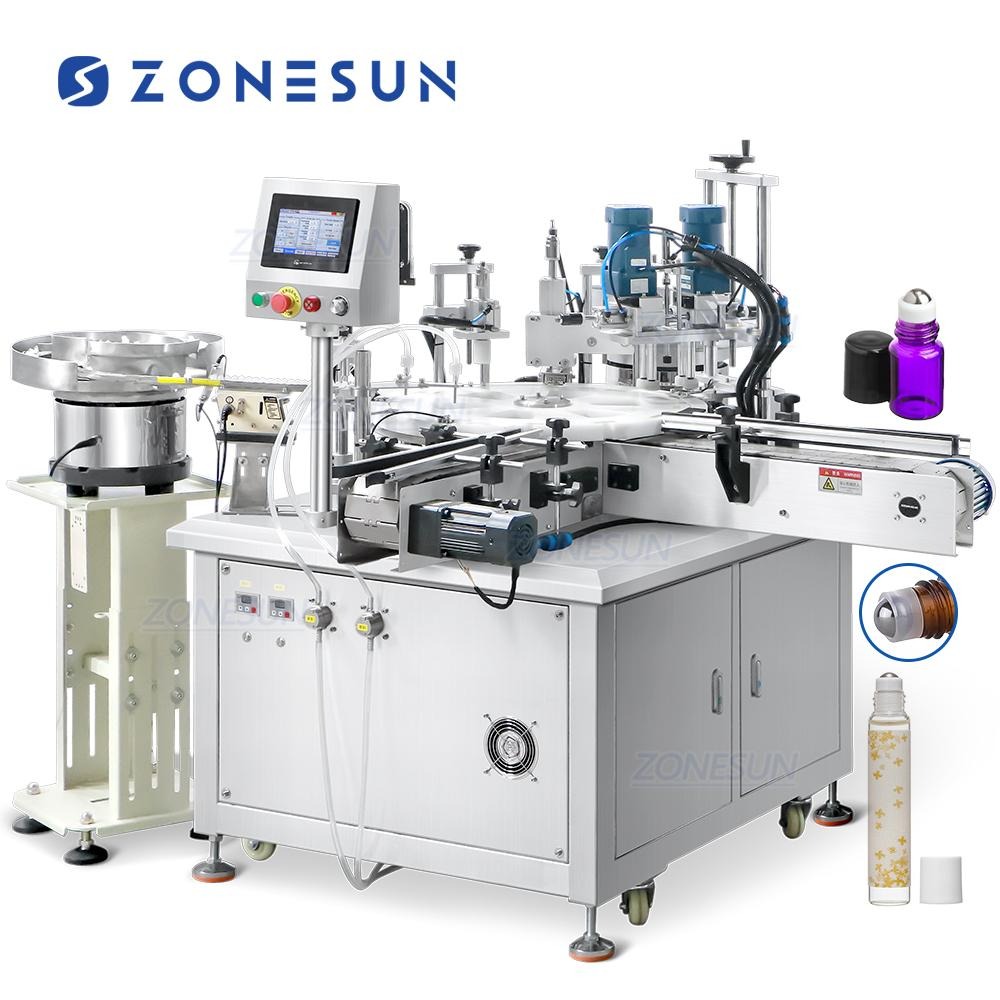
It is easy to think of filling equipment as a beverage-industry tool, but the same core technology shows up in places you would never guess, from sterile pharma suites to artisan hot-sauce kitchens. What unites them is a simple need: put an exact amount of liquid in a bottle and seal it so it survives the journey to the customer. Here is where the bottle filling and capping machine earns its keep across the economy.
1. Bottled Water and Beverages
The highest-volume application of all. Rotary fillers spin dozens of heads past a continuous stream of bottles, hitting speeds that make manual lines look frozen in time. Overflow filling guarantees identical fill levels, the visual cue shoppers expect, while cap torque control keeps carbonation in and contaminants out. In this world, a bottle filling and capping machine is judged on uptime above all: at 20,000 bottles per hour, five minutes of downtime is a lost pallet.
2. Pharmaceuticals
Syrups, eye drops, and oral suspensions demand a different discipline: absolute dosing accuracy and sterile handling. Piston fillers with 316L stainless paths dose to tight tolerances, and the capping stage often adds tamper-evident bands or child-resistant closures with verified torque. Validation documentation matters as much as mechanics here; pharma buyers audit the machine’s materials, cleaning, and data logging before it ever touches product.
3. Cosmetics and Personal Care
Lotions, serums, shampoos, and perfumes share one trait: viscosity all over the map. A single contract manufacturer might fill watery toners in the morning and thick hair masks after lunch, which is why quick-changeover piston systems dominate this sector. Gentle product handling preserves emulsions, and precise fill levels protect premium positioning, because a half-empty-looking serum bottle kills a luxury brand faster than any ad campaign.
4. Food and Sauces
Hot sauces, dressings, honey, and edible oils bring particulates, heat, and hygiene rules. Fillers need heated hoppers, large-bore valves that do not crush chili flakes, and washdown construction for daily sanitation. Capping must defeat both leaks and tampering. For artisan brands scaling up, a compact bottle filling and capping machine is usually the first serious automation step, the moment production jumps from hundreds to thousands of units a day.
5. Household and Industrial Chemicals
Detergents, disinfectants, lubricants, and agrochemicals are corrosive, foamy, or hazardous, sometimes all three. Bottom-up filling controls foam, fume extraction protects operators, and chemical-resistant seals survive aggressive formulas. Here the capping stage carries safety weight: child-resistant and induction-sealed closures are regulatory requirements, not nice-to-haves, and torque verification is part of compliance.
6. Craft and Small-Batch Producers
The most interesting growth is at the small end. Tabletop and compact lines let startups automate before they can afford a full plant, and many vendors now build a bottle filling and capping machine specifically sized for craft runs: a few hundred bottles per batch, fast changeover, and a footprint that fits a rented unit. It is how a hot-sauce brand goes from farmers-market tables to regional grocery shelves without drowning in labor costs.
Emerging Niches: E-liquids, Nutraceuticals, and Beyond
New categories keep adopting the same technology. E-liquid producers need precise small-volume dosing into tiny bottles with child-resistant caps. Nutraceutical brands fill tinctures and wellness shots where dosage accuracy is a label claim. Cannabis beverage makers face strict packaging rules that demand verified seals. In each case the bottle filling and capping machine is adapted with smaller pumps, specialized closures, and sometimes nitrogen flushing, proving how flexible the core platform is when the product changes but the job stays the same.
The Contract Packer Perspective
Contract packers live or die by changeover speed, since they might run water for one client in the morning and essential oils for another by afternoon. For them, the ideal bottle filling and capping machine is the one that swaps formats fastest with the least skilled labor, because margin lives in the minutes between jobs. This is why quick-release parts, recipe-driven controls, and tool-free cleaning command premium prices: they directly convert to billable hours.
One Machine, Many Worlds
From sterile suites to garage startups, the job description never changes: exact fill, reliable seal, repeatable hour after hour. The industries differ only in which half of that equation keeps them up at night, and the best equipment answers both.
Maintenance Rhythms That Prevent Downtime
Across all six industries, the plants with the best uptime share one habit: scheduled maintenance instead of reactive repair. Daily wipe-downs of the fill zone, weekly inspection of seals and gaskets, monthly torque calibration checks on capping heads. A bottle filling and capping machine rewards this discipline enormously because most failures, worn seals, drifting torque, clogged nozzles, announce themselves weeks in advance to anyone looking. Keep a simple logbook at the machine: date, check performed, reading observed. When something eventually drifts, the log tells you exactly when it started, which turns troubleshooting from guesswork into arithmetic.
Stock the wear parts before you need them: seal kits, gripper pads, a spare set of format change parts. The cost of a small spares cabinet is trivial next to a day of lost production waiting on a courier. This is the unglamorous side of automation that separates plants running at 95 percent efficiency from those celebrating 70.
Whether the product is spring water or prescription syrup, the right bottle filling and capping machine turns packaging from a bottleneck into a competitive advantage, which is why specifying a bottle filling and capping machine deserves the same care as formulating the product inside.