
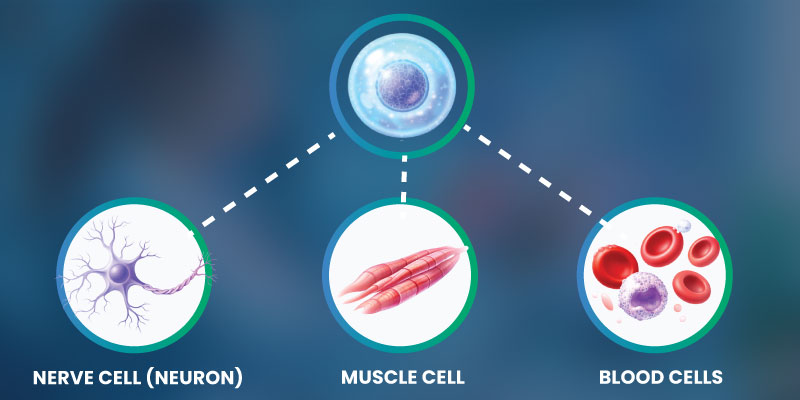
Stem cells have become an important area of modern medicine and scientific research. These unique cells have properties that distinguish them from most mature cells in the human body. They can reproduce themselves and, depending on their type, develop into specialized cells with different functions. Because of these characteristics, stem cells are being studied for tissue repair, disease research, regenerative medicine, and certain established medical treatments.
Although stem cell research has attracted considerable attention, it is important to understand that “stem cell therapy” does not refer to one single treatment. Different stem cells have different biological properties, and their medical applications depend on the type of cells, the condition being treated, and the available scientific evidence.
This guide provides a clear stem cell overview and definition, explains the major types of stem cells, their sources, applications, potential benefits, and the role of stem cell therapy in modern healthcare.
What Are Stem Cells?
Stem cells are relatively unspecialized cells that have the ability to self-renew and develop into specialized cell types. These two characteristics—self-renewal and differentiation—are fundamental to the definition of stem cells.
Most mature cells have a specific function. For example, red blood cells transport oxygen, muscle cells help produce movement, and nerve cells transmit signals. Stem cells are different because they can maintain their stem-cell characteristics while also producing cells that become more specialized.
In the human body, stem cells contribute to normal development and, in certain tissues, help replace cells that are lost through normal wear, injury, or disease.
What Makes Stem Cells Unique?
Stem cells are primarily characterized by two important properties.
Self-Renewal
Self-renewal means that a stem cell can divide and produce cells that retain stem-cell characteristics. This allows stem-cell populations to be maintained over time.
During cell division, the resulting cells can remain stem cells, become more specialized, or follow different developmental pathways depending on the type of stem cell and the signals it receives.
Differentiation
Differentiation is the process through which a less specialized cell develops into a specialized cell. Depending on its potency, a stem cell may be capable of producing a relatively broad or more limited range of cell types.
For example, pluripotent stem cells can give rise to many specialized cells in the body, while adult stem cells are generally associated with particular tissues or systems.
Major Types of Stem Cells
Stem cells can be classified according to their origin and their ability to develop into different cell types.
Embryonic Stem Cells
Embryonic stem cells are derived from the inner cell mass of an early-stage embryo. They are pluripotent, meaning they can develop into many specialized cell types found in the body.
Because of their developmental potential, embryonic stem cells have been important in laboratory research. Their use also involves ethical and regulatory considerations.
Adult Stem Cells
Adult stem cells, also known as somatic stem cells, are found in different tissues and organs after development.
One well-known example is the hematopoietic stem cell, which produces blood cells. Adult stem cells generally have a more restricted developmental potential than pluripotent stem cells and often contribute to the maintenance and repair of particular tissues.
Induced Pluripotent Stem Cells
Induced pluripotent stem cells, commonly called iPSCs, are mature cells that have been reprogrammed in a laboratory to return to a pluripotent-like state.
This technology provides researchers with an important tool for studying human development, diseases, drug responses, and potential cellular treatments.
Where Are Stem Cells Found?
Stem cells can be obtained from different biological sources depending on their type and intended application.
Bone Marrow
Bone marrow contains hematopoietic stem cells that are responsible for producing different types of blood cells. These cells have an established role in hematopoietic stem cell transplantation for selected diseases.
Adipose Tissue
Adipose tissue, commonly known as body fat, contains populations of cells that are being investigated and used in certain regenerative medicine approaches. The exact cellular composition and clinical application depend on how the tissue is collected and processed.
Umbilical Cord and Related Tissues
Umbilical cord blood and other perinatal tissues can provide cells with potential medical and research applications. Their use depends on the type of cells obtained and the specific clinical setting.
Laboratory-Reprogrammed Cells
iPSCs are created by reprogramming mature cells in a laboratory. They provide researchers with a way to study pluripotent cells and create models of certain diseases.
What Is the Role of Stem Cells in the Human Body?
Stem cells naturally contribute to the development and maintenance of the body. In certain tissues, adult stem cells act as a reserve that can produce replacement cells when needed.
For example, blood-forming stem cells continually contribute to the production of blood cells. Other tissue-specific stem cells can support the maintenance of their respective tissues.
This natural regenerative capacity is one reason scientists are interested in understanding stem cell biology and exploring possible therapeutic applications.
Stem Cells and Regenerative Medicine
Regenerative medicine is a field focused on developing approaches to repair, replace, or regenerate damaged cells, tissues, or organs. Stem cells are an important area of regenerative medicine because of their ability to renew themselves and produce specialized cells.
However, regenerative medicine is a broad field, and not every proposed stem cell treatment has the same level of clinical evidence. Some stem cell applications are well established, while others remain under research.
Therefore, patients should distinguish between scientifically established treatments and experimental therapies.
What Is Stem Cell Therapy?
Stem cell therapy refers broadly to medical treatments in which stem cells or cell-derived products are used for a specific therapeutic purpose.
The procedure can vary depending on the type of cells and the condition being treated. Cells may be obtained from a patient or a donor, processed under controlled conditions, and then administered through an appropriate medical procedure.
Liv Hospital describes stem cell therapy as part of regenerative medicine, with applications involving the repair or support of diseased, dysfunctional, or injured tissues.
Importantly, stem cell therapy is not a universal treatment or guaranteed cure for every disease. The appropriateness of a cellular treatment depends on the patient’s diagnosis, medical condition, treatment objectives, and available clinical evidence.
Established Medical Uses of Stem Cells
One of the best-established applications of stem cells is hematopoietic stem cell transplantation (HSCT).
This treatment uses blood-forming stem cells to restore the blood-producing system in selected patients. It can be used in the treatment of certain blood cancers, including leukemia, lymphoma, and myeloma, as well as some genetic blood disorders and immune system conditions.
A stem cell transplant is very different from many experimental regenerative medicine treatments advertised online. It is a specialized medical procedure that requires careful patient selection, preparation, transplantation, monitoring, and follow-up.
Potential Applications of Stem Cell Research
Researchers continue to investigate many possible applications of stem cells.
Tissue Repair
Scientists are studying whether specific stem cells or cell-derived products can contribute to the repair of damaged tissues.
Disease Modeling
Stem cells can help researchers create laboratory models of human diseases. These models may provide insights into how diseases develop and progress.
Drug Development
Stem-cell-based laboratory models can be used to investigate how cells respond to potential medicines, potentially supporting the development of new treatments.
Blood and Immune Disorders
Hematopoietic stem cells already have established applications in transplantation for selected blood and immune-related conditions.
Regenerative Medicine
Researchers are exploring whether cellular therapies can eventually help restore damaged tissues and improve function in a wider range of conditions. However, many of these applications require additional research and clinical evidence.
How Does Stem Cell Therapy Work?
The process varies according to the treatment being considered. In general, a cellular therapy may involve several stages:
- Patient evaluation – The medical team reviews the patient’s diagnosis, health, and treatment goals.
- Cell source identification – Appropriate cells are selected according to the proposed treatment.
- Cell collection – Cells may be collected from bone marrow, adipose tissue, blood, or another appropriate source.
- Cell processing – Cells may be isolated, prepared, or expanded under controlled conditions.
- Quality assessment – Appropriate laboratory testing may be performed depending on the therapy.
- Administration – The prepared cells may be administered through an appropriate clinical procedure.
- Follow-up – The patient is monitored to evaluate response and manage potential complications.
Not every stem cell therapy follows exactly the same process.
Importance of Quality and Safety
Cellular therapies require careful handling because the quality, identity, viability, purity, and preparation of cells can affect their safety and clinical usefulness.
For this reason, specialized laboratories and appropriate quality-control procedures are important when preparing cellular products.
Liv Hospital’s regenerative medicine and stem cell program describes laboratory-based processing, quality control, documentation, and traceability as components of its approach to cellular therapy.
Patients considering a stem cell treatment should ask their healthcare provider about the source of the cells, how they are processed, the evidence supporting the treatment, potential risks, and available alternatives.
Are All Stem Cell Treatments Proven?
No. This is one of the most important points to understand about stem cell medicine.
Some stem cell treatments, particularly hematopoietic stem cell transplantation, have established medical applications. Other proposed uses are still being investigated in clinical trials or research settings.
Patients should be cautious about advertisements claiming that stem cells can cure a wide range of unrelated diseases. A responsible treatment decision should be based on medical evaluation and reliable scientific evidence.
Who May Be Considered for Stem Cell Therapy?
Eligibility depends entirely on the type of treatment and the medical condition.
Before treatment, a healthcare team may consider:
- The patient’s diagnosis
- Disease severity
- Previous treatments
- Age and general health
- Laboratory results
- Imaging or other diagnostic findings
- Potential benefits and risks
- Availability of an appropriate cellular treatment
- Scientific evidence supporting the proposed therapy
A specialist should determine whether stem cell therapy is appropriate rather than relying solely on general claims about regenerative medicine.
Stem Cell Care at Liv Hospital
For patients seeking specialized information about stem cells and regenerative medicine, Liv Hospital provides dedicated healthcare services in this area.
Its Stem Cell services cover stem cell therapy and regenerative medicine, including information about cellular treatment approaches, stem cell sources, laboratory processing, and patient-specific treatment planning.
Liv Hospital also describes its cellular treatment center, LivMedCell, as operating with international Good Manufacturing Practice standards and specialized laboratory infrastructure for cellular products.
Because stem cell treatments differ considerably, patients should undergo an appropriate medical assessment before deciding whether a particular therapy is suitable.
Frequently Asked Questions About Stem Cells
What is the simple definition of a stem cell?
A stem cell is a relatively unspecialized cell that can self-renew and, depending on its type, differentiate into specialized cells.
What are the two main characteristics of stem cells?
The two fundamental characteristics are self-renewal and differentiation. Self-renewal allows stem cells to produce more stem cells, while differentiation allows them to develop into specialized cells.
What are the main types of stem cells?
The major categories include embryonic stem cells, adult or somatic stem cells, and induced pluripotent stem cells.
Are stem cells found naturally in adults?
Yes. Adult stem cells are present in various tissues and organs and can contribute to tissue maintenance and repair.
Is stem cell therapy suitable for everyone?
No. Suitability depends on the specific medical condition, treatment type, patient’s health, and available scientific evidence. A specialist evaluation is necessary.
Can stem cells cure all diseases?
No. Although stem cell research has significant potential, only certain stem cell treatments are currently established medical therapies. Many other applications remain under investigation.
Conclusion
Stem cells are unique biological cells characterized by their ability to self-renew and differentiate into specialized cell types. These properties make them important for normal tissue maintenance, scientific research, regenerative medicine, and selected medical treatments.
Different stem cell types have different capabilities and applications. While hematopoietic stem cell transplantation is an established treatment for certain diseases, many other potential uses of stem cells are still being studied.
As research continues, stem cell science may contribute to new approaches in tissue repair, disease modeling, drug development, and regenerative medicine. However, patients should always evaluate proposed stem cell treatments with qualified medical professionals and consider the scientific evidence, potential benefits, risks, and alternatives.
For more information about stem cell services and regenerative medicine, visit Liv Hospital and explore its dedicated Stem Cell services.