
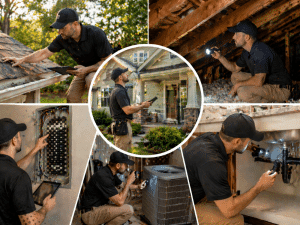
Buying a home is one of the largest financial decisions most people will ever make, and yet a significant number of buyers admit they walked into their inspection day with almost no idea what was about to happen. That uncertainty is fixable. Understanding how the process works, what the inspector is actually evaluating, and what to do with the results puts you in a far stronger position at the negotiating table.
This guide walks through the full inspection experience, specifically for buyers purchasing in the Boise and Treasure Valley area, where local conditions, construction styles, and market pressures all shape what inspection day looks like.
How Long Does a Home Inspection Take?
Most buyers are surprised by how long a thorough inspection runs. For a typical single-family home in the Boise area, expect anywhere from 2.5 to 4 hours. Larger homes, older construction, or properties with crawl spaces, additional structures, or complex systems will push that toward the higher end.
Be cautious of any inspector who wraps up in under two hours on a full-sized home. Speed and thoroughness rarely coexist in this profession. A genuinely detailed inspection takes time because the inspector is physically accessing, testing, and documenting every accessible system and component.
Should You Attend the Inspection?
Short answer: yes, absolutely.
This is one of the most useful things buyers can do. Attending gives you the chance to:
- Walk through the property with the inspector as they work
- Ask questions in real time when something catches their attention
- Understand the difference between minor maintenance items and actual concerns
- Get a firsthand feel for the home’s condition before reading a written report
Some agents advise clients to skip the inspection and just read the report later. That misses a lot. Seeing an inspector point out a moisture stain in a basement corner or demonstrate a sticking window gives you context that no photograph fully captures.
What Does a Home Inspector Check?
This is the core question, and the answer is more comprehensive than most buyers expect. A qualified inspector evaluates the entire visible and accessible structure, not just a surface walkthrough.
Roof and Exterior
The inspection starts from the outside. The inspector assesses the roof covering, flashing around chimneys and vents, gutters, downspouts, and overall drainage. In Idaho, roof conditions matter: freeze-thaw cycles, wind, and hail can accelerate wear. Grading around the foundation is also examined here, since improper slope toward the home is one of the more common causes of basement and crawl space moisture issues.
Foundation and Structure
Foundation issues are among the most expensive repairs a homeowner can face, so this section gets careful attention. Inspectors look for cracks, settling, movement, and signs of water intrusion. In the Treasure Valley, expansive soils and irrigation-heavy lots can put stress on foundations over time.
Plumbing Systems
Every accessible water supply and drain line is evaluated. The inspector checks for leaks, proper pipe materials, water pressure, water heater condition and age, and correct venting. In older Boise neighborhoods, galvanised steel pipes or polybutylene plumbing may still be present, both of which come with known issues.
Electrical Systems
The panel is inspected for proper wiring, correct breaker sizing, grounding, and safety. GFCI protection in bathrooms, kitchens, garages, and outdoor areas is tested. Double-tapped breakers, aluminum branch wiring, and outdated panels are flagged regularly in older Treasure Valley homes.
HVAC Systems
Both heating and cooling equipment are operated and evaluated. The inspector checks age, condition, filter status, and ductwork. In a climate with genuinely cold winters and hot summers, HVAC performance matters. A system approaching 15 to 20 years old is worth factoring into your purchase decisions even if it’s still running.
Insulation and Ventilation
Attic insulation levels and ventilation are checked. Inadequate attic ventilation is a common finding in Idaho homes and contributes to ice damming in winter, elevated cooling costs in summer, and premature roof deterioration.
Interior Components
Windows, doors, floors, ceilings, and walls are all examined for defects, water staining, and signs of deferred maintenance. Inspectors operate every window, open every door, and check for things like evidence of past repairs that may mask a recurring problem.
Crawl Spaces and Basements
Idaho has a large proportion of homes built over crawl spaces. These areas are inspected for moisture, insulation condition, wood rot, pest activity, and structural concerns. Vapor barriers, ventilation, and floor joist condition are all evaluated.
What an Inspection Is Not
This matters as much as knowing what inspectors do check.
A home inspection is not a code compliance audit. Inspectors evaluate conditions against accepted standards, but they are not city code inspectors. It is also not a pass/fail test. The report documents observable conditions at a point in time. Some findings are serious; others are routine maintenance items that come with owning any home.
Inspectors also cannot see through walls, underground pipes, or concealed systems. They evaluate what is accessible and visible. Specialty tests like radon gas testing, mold sampling, and sewer scoping are separate services that can be added alongside a standard inspection.
Choosing the Right Inspector in Boise
Idaho does not regulate home inspectors. Anyone can call themselves a home inspector in this state without a single hour of training. That makes credential verification genuinely important, not just a box-ticking exercise.
Look for inspectors who hold recognized credentials such as:
- CMI (Certified Master Inspector): The highest designation in the profession, requiring documented experience and peer review
- InterNACHI Certified: Requires ongoing education and adherence to a code of ethics
- NACHI or ASHI membership: Additional indicators of commitment to professional standards
Peek Inspections is the only inspection team in the Treasure Valley with two Certified Master Inspectors on staff, a meaningful distinction in an otherwise unregulated market. Founder Joey McPeek trained under a Master Inspector in the Carolinas, where inspector regulation is significantly stricter than Idaho, bringing that standard of rigor into every inspection they perform.
How to Read Your Inspection Report
The report arrives same day or next day in most cases. Modern reports are photo and video-rich, which helps enormously when you are trying to interpret findings without being present for every moment of the inspection.
When reading through, resist the urge to panic at the length. A thorough report on a well-maintained home may still run 40 to 60 pages because a good inspector documents everything, including items that are simply informational.
Here’s a practical way to sort through findings:
- Safety concerns: These get addressed first. Think electrical hazards, gas leaks, structural risks, or anything that poses an immediate risk to occupants.
- Major system deficiencies: Roof at end of life, failing HVAC, foundation movement. These carry significant cost implications.
- Deferred maintenance: Peeling caulk, dirty HVAC filters, worn weather stripping. Normal homeownership items.
- Informational notes: Age of appliances, minor code updates, recommendations for future monitoring.
Your inspector should be available to walk through the report with you after delivery. If they hand over a document and disappear, that is a red flag about the quality of service.
Using the Report in Negotiations
Inspection findings are not the end of a deal. They are information, and information is leverage.
In a Boise market that has seen sustained competition, buyers sometimes feel pressure to waive inspections or avoid asking for repairs. That is a personal risk tolerance decision, but a thorough inspection report gives you options. You can request specific repairs, ask for a price reduction to offset costs, or simply choose to walk away from a property with serious issues before you are legally bound to it.
According to the American Society of Home Inspectors, buyers who skip inspections significantly increase their financial risk. That context holds especially true in Idaho, where the lack of inspector regulation makes it even easier to end up with an inadequate evaluation if you have not done your homework upfront.
Key Takeaways
- A thorough home inspection in Boise typically takes 2.5 to 4 hours. Shorter does not mean better.
- Attending the inspection in person gives you context that a written report alone cannot fully convey.
- Inspectors evaluate structure, roof, plumbing, electrical, HVAC, insulation, and interior components, among other systems.
- Idaho does not regulate home inspectors, so checking credentials like CMI and InterNACHI certification is essential.
- The report is a prioritisation tool, not a verdict. Use it to make informed decisions, not to measure a home as good or bad.
Frequently Asked Questions
How much does a home inspection cost in Boise, Idaho? Inspection pricing in the Treasure Valley typically ranges from $350 to $600 or more depending on the home’s size, age, and the inspection tier selected. Premium inspection packages that include more exhaustive evaluation or additional testing like radon will cost more. Consider it relative to the purchase price: for a $450,000 home, a few hundred dollars for a detailed inspection is a small investment.
Can I request a second inspection if I am not satisfied with the first one? Yes. There is nothing stopping a buyer from bringing in another inspector, though it requires seller cooperation to access the property again and adds time to an already time-sensitive process. The better approach is to choose a qualified, credentialed inspector before the first visit.
What happens if the inspection reveals major problems? You have several options. You can negotiate with the seller to have issues repaired before closing, request a credit or price reduction, or in some cases walk away from the transaction entirely if your contract includes an inspection contingency. Major findings rarely mean a deal automatically falls apart; they shift the conversation.
Is a new construction home in Boise still worth inspecting? Absolutely. New builds are not automatically defect-free. Common findings in new construction include framing issues, drainage problems, electrical oversights, and insulation gaps that pass builder walkthroughs but get caught by independent inspectors. The builder’s own quality checks serve the builder’s interests; an independent inspection serves yours.
How soon after the inspection do I receive the report? With a well-run inspection service, the report typically arrives the same day or by the next morning. Same-day delivery is increasingly the standard for reputable inspectors in competitive markets where buyers are working against contract deadlines.
Conclusion
Inspection day does not have to be stressful. When you understand what the process involves, what the inspector is actually looking at, and how to use the report afterward, it becomes exactly what it should be: a tool for making a confident, informed decision.
The Boise and Treasure Valley market moves fast, but that is not a reason to cut corners on due diligence. The right inspector, the right credentials, and the right report can save you from expensive surprises down the road and give you real peace of mind going into closing.
If you are planning a purchase in the area, take the time to verify your inspector’s credentials before scheduling, and ask specifically about their reporting format and turnaround. Those two questions alone will tell you a lot about who you are dealing with.