
Water parks operate in one of the most demanding service environments in the leisure industry. High guest volume, wet conditions, cash handling risks, locker management, queue congestion, and safety monitoring all intersect in a fast-moving setting. Traditional ticketing systems and paper-based processes struggle to keep up.
RFID wristbands have emerged as a practical solution for water park operators seeking to improve guest experience, operational control, and revenue tracking—without adding friction to the visit.
This article examines how RFID wristbands are deployed in water parks, what technical specifications matter most, and what operators should consider when selecting a supplier such as XIUCHENG RFID.
Why Water Parks Need RFID Infrastructure
Unlike dry amusement parks, water parks introduce additional operational complexity:
- Guests wear swimwear with limited pocket space
- Cash and cards are easily lost or damaged
- Wet environments degrade paper tickets
- Locker keys are frequently misplaced
- High crowd density increases queue times
RFID wristbands address these issues by consolidating ticketing, payment, and identification into a single waterproof credential worn throughout the visit.
Core Applications of RFID Wristbands in Water Parks
1. Contactless Entry
Guests receive an RFID wristband at check-in, encoded with:
- Ticket type
- Access level (standard, VIP, season pass)
- Age or height restrictions
- Time-based entry permissions
Turnstiles validate access instantly, reducing manual inspection and speeding entry during peak hours.
2. Cashless Payments
One of the strongest ROI drivers is cashless payment integration.
Guests can:
- Link wristbands to prepaid balances
- Connect to credit cards
- Make purchases at food stalls and retail shops
- Rent cabanas or premium seating
Benefits for operators:
- Increased per-capita spending
- Reduced cash handling risks
- Faster transaction times
- Improved financial reconciliation
Parents particularly value the ability to preload spending limits for children.
3. Locker Access
Locker key management is a persistent pain point in water parks. Physical keys are lost, broken, or stolen.
RFID wristbands enable:
- Secure locker assignment
- Automatic reassignment at checkout
- Reduced staffing at locker counters
- Digital audit trails
This eliminates key inventory management entirely.
4. Ride Access Control
RFID can enforce:
- Height-based ride restrictions
- VIP fast-lane privileges
- Time-slot reservations
This ensures compliance with safety regulations while managing guest flow more effectively.
5. Guest Tracking and Safety
In large water parks, RFID systems can assist with:
- Real-time occupancy monitoring
- Lost child identification
- Crowd density analysis
While RFID is not a GPS tracking solution, gate-based read points provide movement insights that support operational decision-making.
Technical Requirements for Water Park RFID Wristbands
Water park environments are harsh. Wristbands must withstand:
- Continuous water exposure
- Chlorinated pools
- UV radiation
- High humidity
- Mechanical stress
Key technical specifications include:
✔ Waterproof and Sealed Housing
Silicone encapsulation is commonly used due to flexibility and chemical resistance.
✔ Secure Chip Integration
HF (13.56 MHz) is typically used for short-range access and payment applications. UHF may be used for longer-range detection in specific zones.
✔ Tamper-Resistant Design
One-time locking mechanisms prevent unauthorized transfer between guests.
✔ Skin Safety Compliance
Materials should meet safety standards for prolonged skin contact.
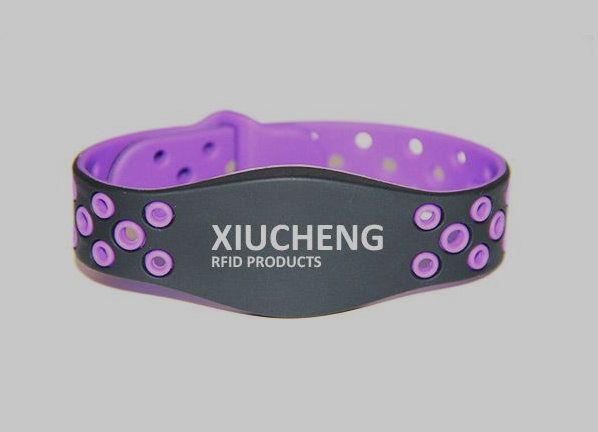
Manufacturers such as XIUCHENG RFID produce silicone RFID wristbands designed for long-term water exposure and repeated guest handling, with customizable color, logo printing, and chip options tailored to park systems.
Operational Benefits for Water Park Operators
Revenue Growth
Cashless environments consistently increase average guest spending. The frictionless nature of tap-to-pay encourages impulse purchases.
Labor Efficiency
Automation reduces:
- Manual ticket verification
- Cash register handling
- Locker staffing requirements
Staff can focus on guest service rather than administrative tasks.
Data Insights
RFID transaction logs provide:
- Peak spending analysis
- Popular ride tracking
- Queue pattern insights
- Inventory planning support
This data supports better seasonal forecasting and promotional planning.
Guest Experience Improvements
From a visitor perspective, RFID wristbands offer:
- Convenience (no wallets needed)
- Faster transactions
- Reduced waiting time
- Simplified locker access
- Safer family management
For families with children, not having to manage physical tickets or keys significantly improves the experience.
Implementation Considerations
Before deployment, operators should evaluate:
- Integration compatibility with POS systems
- Network infrastructure reliability
- Data security and encryption standards
- Staff training requirements
- Peak load testing
Pilot testing during off-peak seasons is recommended to identify workflow adjustments before full-scale rollout.
Sustainability Considerations
Many parks are exploring:
- Reusable RFID wristbands for season pass holders
- Eco-friendly silicone materials
- Deposit-based return systems
Reducing single-use plastics aligns with broader environmental goals while lowering long-term procurement costs.
Future Trends
Water parks are increasingly integrating RFID wristbands with:
- Mobile apps for balance tracking
- Photo and media capture systems
- Dynamic pricing models
- Loyalty programs
As smart venue ecosystems expand, RFID serves as the physical credential layer connecting guests to digital services.
Conclusion
RFID wristbands have moved from being a novelty to becoming operational infrastructure in modern water parks. They streamline access control, eliminate cash dependency, improve locker management, and generate valuable operational data.
For park operators, the decision is no longer whether RFID adds value—but how to deploy it efficiently and securely. Selecting durable, waterproof wristbands from an experienced supplier is critical to long-term success.
When implemented correctly, RFID wristbands enhance both operational performance and guest satisfaction—two outcomes that directly impact profitability in the competitive leisure industry.