
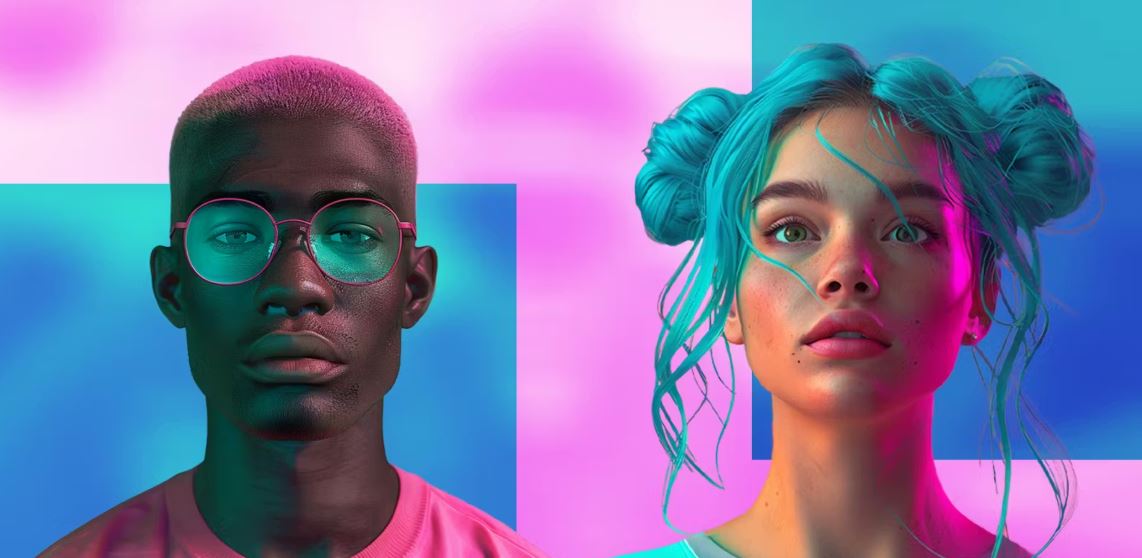
The Rise of AI Influencers: How Virtual Creators Are Reshaping the $250B Creator Economy
The creator economy has entered a new era. What started with blogs and YouTube channels has evolved into a $250 billion industry—and now, artificial intelligence is rewriting the rules again.
AI influencers are no longer a science fiction concept. They’re here, building massive followings, landing brand deals, and generating real revenue. For marketers, entrepreneurs, and brands watching from the sidelines, the question isn’t whether this trend will matter—it’s how quickly you can adapt.
The Numbers Behind the Movement
The data tells a compelling story. Platforms embracing AI-generated creators have seen explosive growth, with some reporting 450% year-over-year revenue increases. One subscription platform saw its AI creator segment grow by over 2,650% in just 18 months.
Individual AI influencers are proving equally impressive. Virtual models like Aitana López have amassed nearly 300,000 Instagram followers in under eight months, generating five-figure monthly incomes through brand partnerships and exclusive content. Emily Pellegrini, another AI-generated personality, grew her following to over 380,000 while reportedly earning $20,000+ monthly.
These aren’t outliers. Industry analysts estimate that AI-generated influencers now account for approximately 15% of gross merchandise value on platforms that permit them—a figure that’s doubling roughly every six months.
Why AI Influencers Are Gaining Ground
The appeal is straightforward: AI influencers solve fundamental problems that have plagued influencer marketing since its inception.
Consistency and Control
Traditional influencer partnerships come with inherent risks. Human creators get tired, make controversial statements, change their appearance, or simply lose interest. AI influencers deliver the same face, the same voice, and the same brand-safe personality every single time.
For brands, this means campaigns that stay on-message indefinitely. There’s no reputation risk from an influencer’s personal life spilling into headlines. The character you design today remains exactly that character tomorrow.
Scalability
Human content creators face physical limitations. They can only be in one place, shooting one piece of content at a time. Recovery time, scheduling conflicts, and creative burnout all constrain output.
AI influencers operate without these boundaries. A single virtual character can generate dozens of content variations in hours—different outfits, different locations, different moods—without booking flights or coordinating schedules.
Cost Efficiency
The economics are difficult to ignore. A professional photoshoot with a human model involves photographers, makeup artists, location fees, travel costs, and the model’s own fees. The total easily reaches five figures for a single campaign.
AI-generated content slashes these costs dramatically. After the initial character development, producing additional content requires only the tools and time to generate it. Marginal costs approach zero while quality remains consistent.
The Technology Making It Possible
Several converging technologies have brought AI influencers from novelty to viability.
Image generation models have achieved photorealistic quality. Tools built on architectures like Stable Diffusion and Flux produce outputs that casual viewers cannot distinguish from photographs. Advanced systems now maintain character consistency across hundreds of generated images—the same face, the same proportions, the same distinctive features.
Video generation has caught up. Motion transfer technology allows static AI characters to move naturally, speak convincingly, and express genuine-seeming emotion. What once required Hollywood-level CGI budgets now runs on consumer hardware.
Voice synthesis completes the package. AI voice cloning can replicate or create distinctive voices that respond in multiple languages, enabling virtual influencers to engage global audiences without translation delays.
Platforms like Filtrix AI have emerged specifically to address these needs, offering inference engines optimized for character consistency. The ability to generate photorealistic, recognizable AI influencers without complex prompt engineering has lowered the barrier to entry significantly. What once required teams of technical specialists can now be accomplished by marketers with creative vision but limited technical background.
Real Applications Beyond the Obvious
While much attention focuses on lifestyle and fashion content, the applications extend further than many realize.
E-commerce and Product Marketing
AI influencers can serve as perpetual brand ambassadors for product lines. They can model clothing, demonstrate products, and appear in advertising without availability constraints. Some brands have begun using virtual models for their entire catalog photography—same “model,” thousands of products, fraction of the cost.
Localized Global Campaigns
A single AI character can be adapted for different markets without the complexity of hiring local talent. The same influencer can speak Portuguese to Brazilian audiences, Japanese to Tokyo consumers, and German to European markets—maintaining brand consistency while respecting cultural context.
Customer Engagement
Interactive AI influencers are beginning to handle customer service and community management functions. When connected to large language models, these characters can answer questions, provide recommendations, and maintain ongoing relationships with followers at scale.
Internal Communications
Some organizations have begun deploying AI personas for internal training and communications. A consistent virtual presenter delivers onboarding materials, policy updates, and training content without scheduling constraints.
The Challenges Worth Acknowledging
This shift isn’t without complications.
Authenticity Concerns
Audiences increasingly value genuine connection with creators. While AI influencers can simulate personality, the relationship dynamic differs fundamentally from following a real person’s journey. Brands must decide whether their audience prioritizes authenticity or whether the content itself matters more.
Disclosure Requirements
Regulatory frameworks are evolving. Several jurisdictions now require clear disclosure when AI generates content, and more stringent rules are likely coming. Smart operators are building transparency into their approach from the start rather than retrofitting compliance later.
Platform Policies
Major platforms maintain varying policies on AI-generated content. Instagram and TikTok have begun implementing labeling requirements. Some subscription platforms prohibit AI creators entirely, while others actively court them. Understanding where and how to deploy AI influencers requires navigating this fragmented landscape.
Saturation Risk
As tools become more accessible, differentiation becomes harder. The first wave of AI influencers stood out through novelty alone. Future success will require the same strategic thinking that distinguishes successful human creators: unique positioning, consistent value delivery, and genuine audience understanding.
What This Means for Different Players
For Brands
The opportunity is clear: AI influencers offer controllable, scalable, cost-effective marketing assets. The question becomes how to integrate them alongside human partnerships rather than viewing it as an either-or choice. The most sophisticated approaches will likely blend both—human influencers for authentic connection, AI influencers for scale and consistency.
For Agencies
A new service category is emerging. Agencies that develop expertise in AI influencer creation and management position themselves for significant growth. This includes not just the technical creation but the strategic character development, platform distribution, and community management that make virtual creators successful.
For Individual Creators
Perhaps counterintuitively, AI tools may benefit human creators most of all. The same technology that creates virtual influencers can help real people produce more content, maintain consistency across platforms, and scale their personal brands beyond what’s physically possible alone.
For Entrepreneurs
The creator economy’s next wave of successful companies will likely include those building tools, platforms, and services for AI influencer creation and management. We’re in the infrastructure-building phase of a significant shift.
Looking Forward
AI influencers aren’t replacing human creators—they’re expanding what’s possible in digital content and marketing. The total addressable market grows as new use cases emerge.
The winners in this space will be those who understand that technology is just the enabler. Success still requires the fundamentals: understanding your audience, delivering consistent value, and building something people actually want to follow.
The tools now exist for anyone to create a professional-quality AI influencer. What separates successful virtual creators from forgotten experiments will be the same thing that’s always separated great marketing from noise: strategy, execution, and genuine audience understanding.
The creator economy’s next chapter is being written now. The question isn’t whether AI influencers will matter—it’s whether you’ll be creating them or competing against them.