
The journey of raising a child with autism is one of unique challenges and profound rewards. As autism prevalence continues to rise—now affecting 1 in 31 children in the United States—more families than ever are seeking effective interventions that can help their children thrive [1]. Among the most well-researched and evidence-based treatments, ABA therapy for children stands out as a powerful approach that has transformed the lives of countless families. This comprehensive guide explores the principles of modern ABA therapy, its proven benefits, and what parents should look for when choosing an ABA provider in 2025.
Understanding ABA Therapy: A Science of Hope and Progress
Applied Behavior Analysis (ABA) is a scientific approach to understanding and changing behavior that has been rigorously studied and validated for over 50 years. The core principle of ABA is that behavior is learned and can be modified through systematic application of behavioral principles. More than 20 studies have established that intensive and long-term therapy using ABA principles improves outcomes for many children with autism, leading to significant improvements in intellectual functioning, language development, and adaptive-behavior skills [2].
The effectiveness of ABA therapy is supported by extensive meta-analytic research. A comprehensive review found that ABA programs are moderately to highly effective, bringing significant benefits for children with autism spectrum disorder in areas including communication, socialization, and daily-living skills [3]. These findings have contributed to ABA being recognized as an evidence-based practice by numerous professional organizations and being covered by insurance in all 50 states.
The global ABA-therapy market, which reached $7.97 billion in 2025, reflects the growing recognition of ABA’s effectiveness and the increasing demand for high-quality services [4]. This growth has been accompanied by significant advancements in service-delivery models, with providers increasingly adopting naturalistic, play-based approaches that engage children in meaningful learning experiences.
The Evolution of ABA: From Traditional to Modern, Child-Centered Approaches
The field of ABA has undergone a significant transformation since its early applications in autism treatment. While traditional ABA programs often relied heavily on discrete trial training (DTT)—a structured teaching method that breaks skills into small, teachable components—modern ABA has embraced a more naturalistic and child-centered approach.
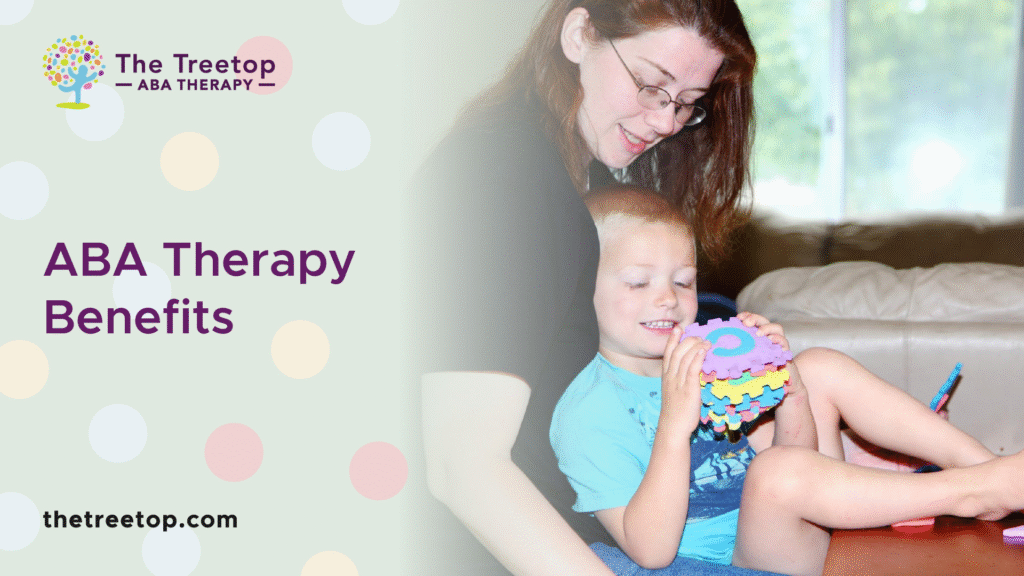
Contemporary ABA therapy incorporates Natural Environment Teaching (NET), which involves teaching skills in the context of a child’s natural environment and interests. This approach recognizes that children learn best when they are engaged and motivated, and that skills learned in natural contexts are more likely to generalize to other settings. For example, instead of teaching colors through repetitive drills at a table, a modern ABA therapist might incorporate color identification into play activities with blocks, art projects, or outdoor exploration.
The shift toward play-based ABA reflects current research on child development and learning. Studies show that children are more engaged and retain information better when learning occurs through play and natural interactions. This approach also aligns with family preferences; parents report higher satisfaction with therapy programs that feel natural and enjoyable for their children.
The Benefits of ABA Therapy for Children with Autism
High-quality ABA therapy delivers extensive, life-changing benefits:
- Improved Communication Skills
ABA helps children develop both verbal and non-verbal communication. For non-verbal children, ABA can teach sign language or AAC devices; for verbal children, it improves conversational skills, social pragmatics, and language use in social contexts. - Enhanced Social Skills
Children learn turn-taking, sharing, initiating interactions, reading social cues, and building meaningful relationships with peers and family. - Increased Independence in Daily-Living Skills
Dressing, eating, personal hygiene, and other self-care skills are taught systematically, reducing family stress and improving quality of life. - Reduced Challenging Behaviors
Tantrums, aggression, and self-injury are decreased by identifying the function of each behavior and teaching safer, more appropriate alternatives.
What to Look for in an ABA Provider
Choosing an ABA provider is one of the most important decisions a family will make. With demand for Board Certified Behavior Analysts (BCBAs) rising 58 % from 2023 to 2024 [5], ensure your provider meets these criteria:
- Qualified & Experienced Staff – BCBAs must supervise all treatment; behavior technicians must receive ongoing training and supervision.
- Individualized Treatment Plans – Plans must be based on comprehensive assessment, tailored to your child’s unique learning style, and updated regularly.
- Family-Centered Approach – Parents and caregivers should receive hands-on training and continuous support.
- Naturalistic & Play-Based Methods – Most instruction should occur in natural contexts, using your child’s interests to create engaging learning opportunities.
- Data-Driven Decision Making – You should receive regular progress reports backed by objective data.
The Role of Technology in Modern ABA Therapy
Trends shaping the ABA industry in 2025 include:
- Artificial-intelligence tools that personalize learning in real time
- Virtual-reality programs for safe social-skills practice
- Telehealth platforms that expand access to services—especially valuable for rural or immunocompromised families
These technologies supplement—never replace—human interaction. Hybrid models (in-person + remote) now offer families greater flexibility while maintaining treatment fidelity.
The Future of ABA Therapy for Children
The field is moving toward precision medicine—matching interventions to each child’s unique profile. Ongoing studies aim to identify which treatments work best for which children under what circumstances, promising even better outcomes. Continued integration of AI, machine-learning analytics, and family-centered care will further refine service delivery and community inclusion.
Conclusion
ABA therapy for children with autism has evolved into a sophisticated, highly effective intervention that can unlock every child’s potential. By understanding modern ABA principles, the benefits it provides, and what to look for in a provider, parents can make informed decisions that help their children thrive. As research, technology, and innovative service-delivery models advance, the future holds exceptional promise for improving outcomes for the growing number of children and families affected by autism spectrum disorder.
References
[1] Centers for Disease Control and Prevention. (2025, April 15). Autism prevalence rises to 1 in 31 children in the U.S. Autism Speaks. https://www.autismspeaks.org/science-news/autism-prevalence-rises-1-31-children-us
[2] Autism Speaks. (n.d.). Applied Behavior Analysis (ABA). https://www.autismspeaks.org/applied-behavior-analysis
[3] Makrygianni, M. K., & Reed, P. (2018). A meta-analytic review of the effectiveness of behavioural early intervention programs for children with Autistic Spectrum Disorders. Research in Autism Spectrum Disorders, 51, 35-50.
[4] ABC Achieve. (2025, August 8). The Growing Impact of Applied Behavior Analysis (ABA). https://abcachieve.com/growing-impact-of-applied-behavior-analysis/
[5] Behavior Analyst Certification Board. (2025, February 13). US employment demand for behavior analysts: 2010–2024. https://www.bacb.com/wp-content/uploads/2025/02/Lightcast2025_250204-a.pdf
[6] Raven Health. (2025, February 9). Top Trends Shaping the ABA Industry in 2025. https://ravenhealth.com/blog/aba-industry/